
You’ve saved a dozen dark, dramatic bedrooms on Pinterest, but when you try to recreate a gothic bedroom in your own space, something always feels slightly off. This collection skips the overly styled photos and focuses on ideas that translate to real rooms—whether you’re working with a Victorian shell, a modern box, or a tiny rental. The difference between a pinned image and a room that works comes down to material choices and knowing when to stop adding pieces.
1. Dark Wall Paneling With Brass Sconces
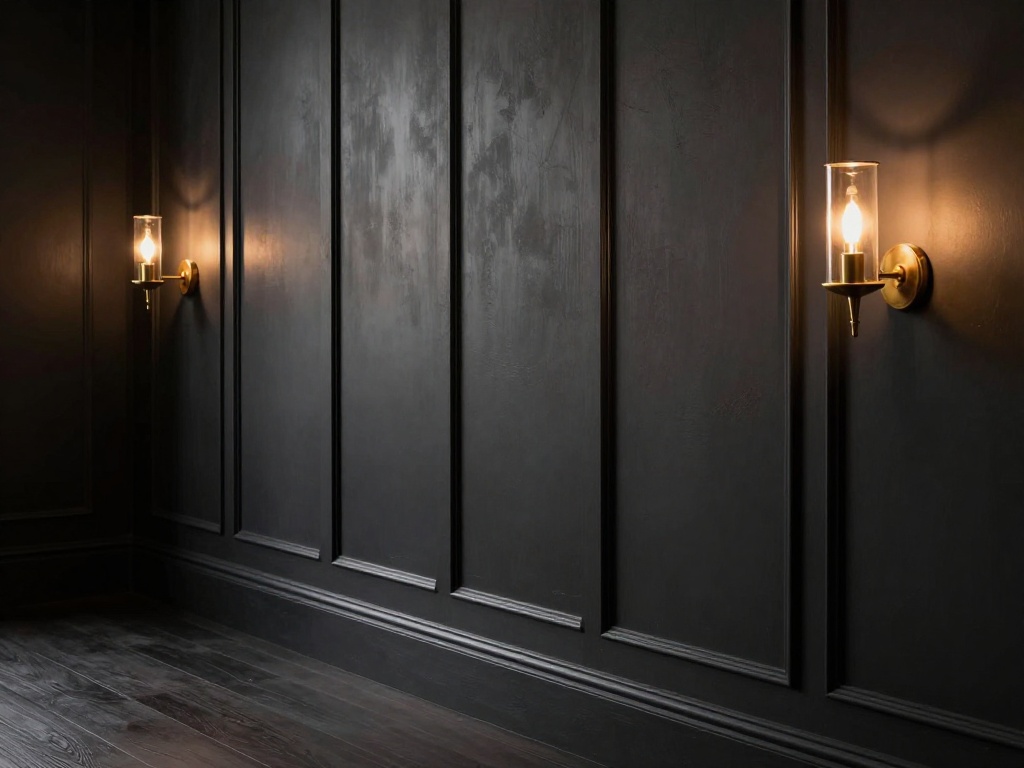
Floor-to-ceiling wall paneling painted in a matte, near-black charcoal instantly anchors a gothic bedroom. The vertical lines draw the eye upward, making ceilings feel taller, while the matte finish absorbs light rather than reflecting it. Brass sconces mounted directly onto the panels add warmth and a subtle Art Deco counterpoint to the heavy mood. This approach works especially well for a Victorian gothic bedroom where architectural detail already exists. The paneling provides a textural surface that flat drywall simply cannot replicate, and the brass introduces a warm metallic note against the cool charcoal.
Space Wins — height illusion without structural changes; light layering that softens the dark walls; a timeless architectural detail that works in both Victorian and modern homes.
Materials + Finish — matte paint in Farrow & Ball’s Off-Black or similar; unlacquered brass that will patina naturally; simple dome or lantern-shaped sconces.
The result is a room that feels like a moody library, not a teenager’s dorm room.
2. Antique Mirror Above A Carved Headboard
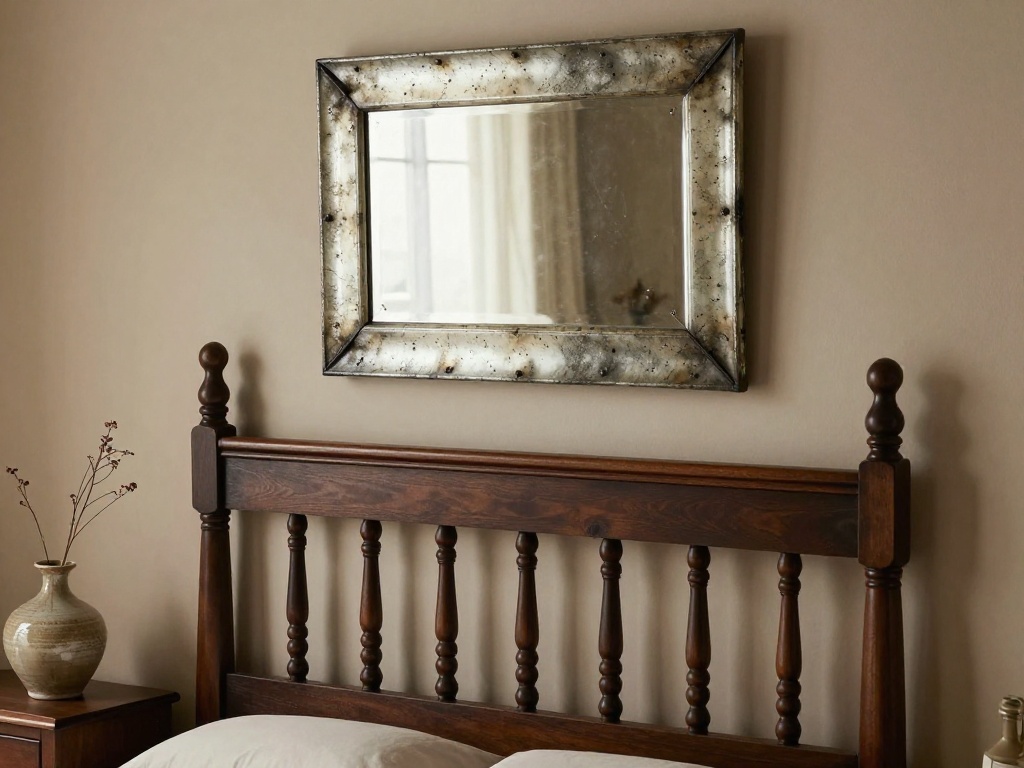
Swap the standard flat mirror for an antique or mercury-glass piece above your bed. The distorted, silvery reflection breaks up the dark wall without adding a single colorful object. Place it above a dark wood headboard with visible carving or turned spindles—the contrast between the smooth, reflective surface and the tactile, aged wood creates a gothic bedroom that feels collected over time. The aged patina on the glass adds an heirloom quality that new mirrors simply cannot replicate. Light hits the irregular surface and scatters softly, creating the kind of diffused glow that makes a room feel intentionally atmospheric rather than accidentally dim.
Layout Wins — vertical interest that doesn’t compete with the bed; a lighter visual element directly at eye level; a trick that makes a small gothic bedroom feel bigger without losing darkness.
Textures + Accents — mercury glass with light spotting and dark edges; dark walnut or mahogany with visible grain; a single ceramic vase or candle on the nightstand to reflect.
The mirror becomes the room’s focal point without shouting.
3. Layered Velvet Curtains Over Sheer Under-Curtains
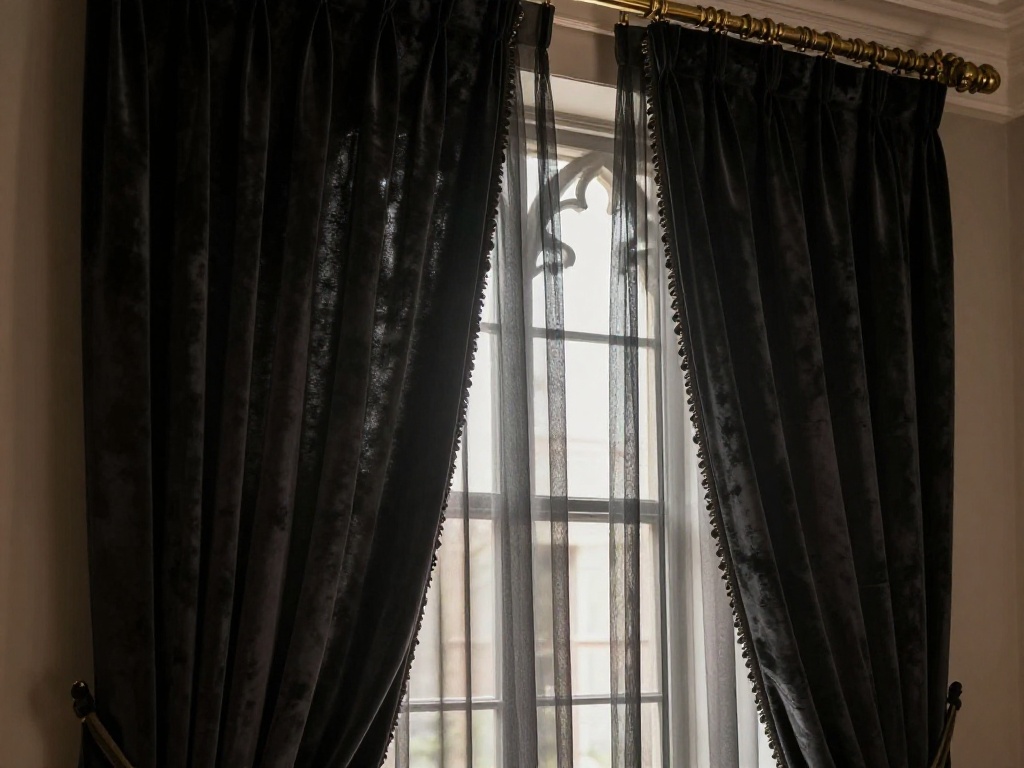
One set of blackout curtains reads flat and utilitarian. Double up: mount a sheer, dark gray or charcoal curtain closest to the window, then overlay a heavier velvet or chenille panel in black or deep plum. The sheers diffuse daylight into a soft, smoky glow, while the velvet traps light when fully drawn. This layering trick is the secret to a gothic bedroom that feels luxurious rather than like a cave. The combination of matte and lustrous textiles creates the dimensional depth that high-end interiors rely on. When sunlight hits the layered fabrics, the sheer filters harsh rays while the velvet absorbs the rest, leaving a room bathed in the kind of soft, indirect light that flatters dark walls and pale skin equally.
Textile Wins — light control without harshness; depth and movement that plain curtains lack; a high-end hotel feel for a fraction of custom-drape cost.
Palette + Vibe — charcoal sheers plus black velvet; deep plum as a third accent if you have the width; brass or wrought-iron curtain rods.
Draw them open during the day and the sheers do the atmospheric work for you.
4. Tarnished Gold Or Silver Leaf Ceiling
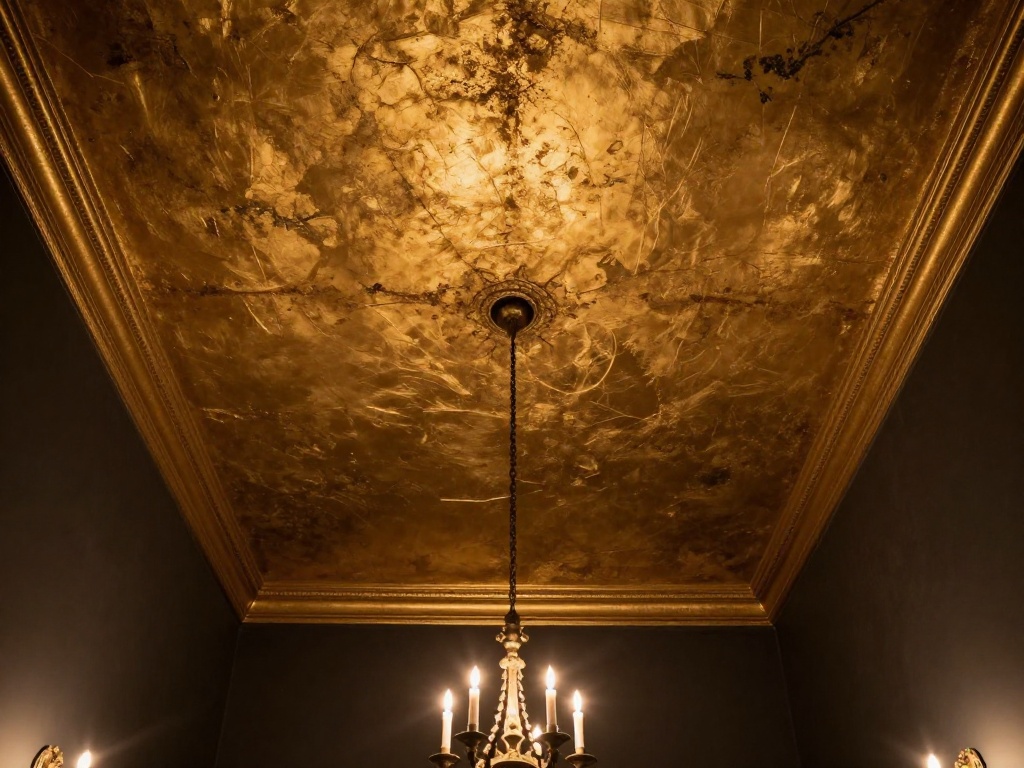
The ceiling is the most underutilized surface in a gothic bedroom. Apply a tarnished gold or silver leaf finish—or use metallic paint with a sponging technique—to create a reflective, slightly imperfect surface overhead. The uneven sheen catches candlelight and lamp glow, bouncing a warm, dim light back down onto the darker walls. It reads as historical, not flashy, especially when the leaf has visible age and darker patches. For a modern gothic bedroom, this technique adds old-world craftsmanship without sacrificing clean lines. The metallic surface acts as a subtle reflector, bouncing available light back into the room rather than letting it disappear into dark paint.
Space Wins — vertical interest in the one place most people ignore; light amplification without adding fixtures; a head-turning detail that costs less than a full renovation.
Materials + Finish — composition gold leaf with a dark wax wash; silver leaf with a gray glaze; or a high-quality metallic paint applied with a crumpled cloth.
The ceiling becomes a fifth wall that ties the whole dark palette together.
5. Black Iron Bed Frame With Vintage Linens
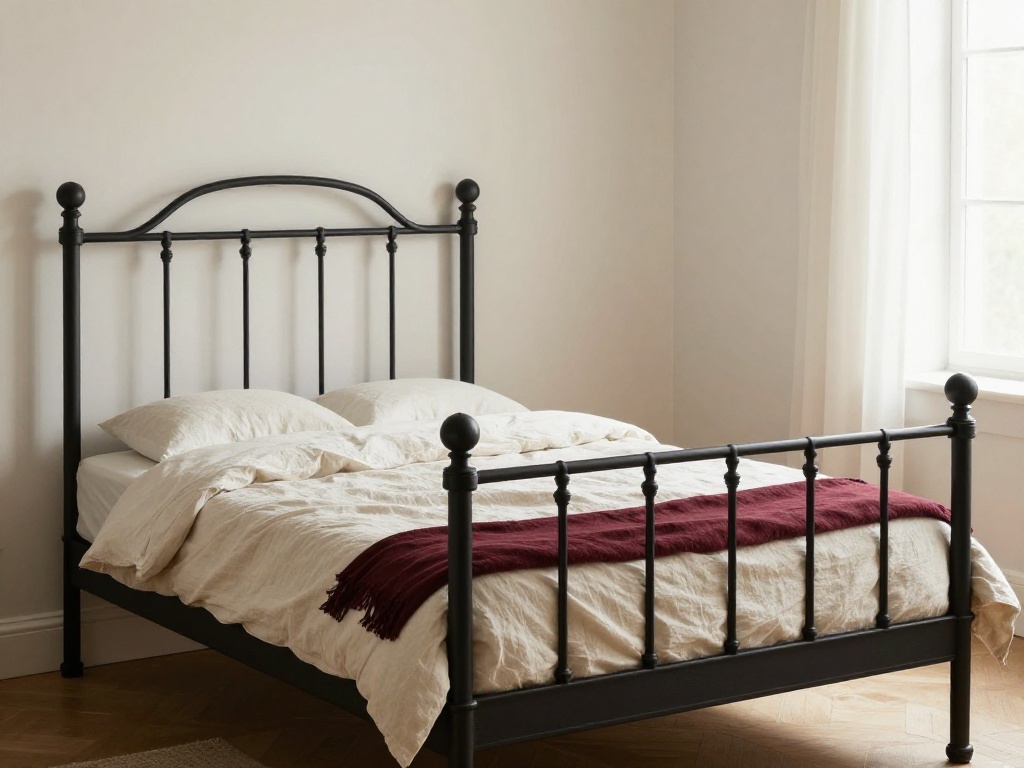
Skip the upholstered headboard and choose a wrought-iron or black-painted steel bed frame with clean, simple lines or a slight curve. The thin, dark structure keeps the bed visually light—it doesn’t absorb light the way a massive wood headboard does. Dress it with vintage or vintage-inspired linen sheets in off-white or stone, then layer a single textured throw at the foot. This combination keeps a gothic bedroom from feeling heavy and oppressive. The ironwork adds an architectural skeleton that grounds the softer textiles. A wrought-iron frame also creates negative space around the mattress, allowing the eye to move through the room rather than stopping at a solid block of upholstery.
Material Wins — a frame that reads as architectural not furniture; breathable, natural fabrics that balance the darkness; a look that works in both a Victorian townhouse and a modern loft.
Tones + Highlights — matte black iron; warm ivory or oatmeal linen; a single deep burgundy or forest green throw for a subtle pop.
It’s the most historically accurate gothic look with the least visual weight.
6. Candle Sconces On Either Side Of The Bed
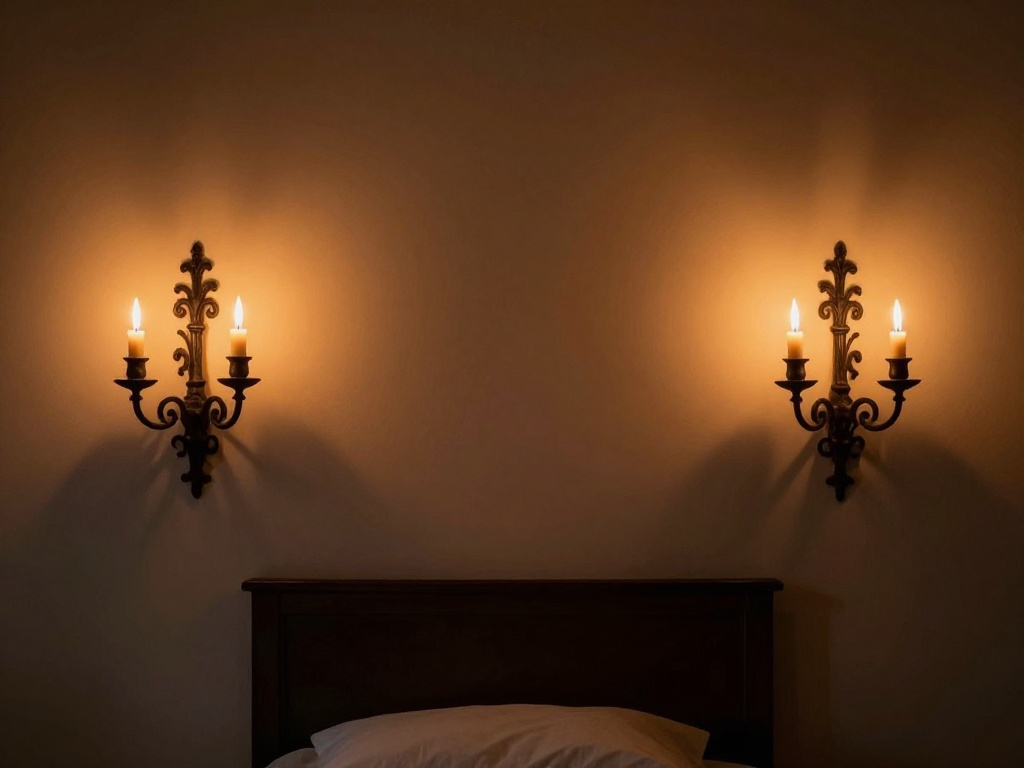
Wall-mounted candle sconces save nightstand space and create a symmetrical, chapel-like feel. Use real candle holders with battery-operated flameless candles (the ones with a realistic wax coating and flickering amber light) or hardwire low-wattage fixtures with Edison bulbs. The side-by-side glow frames the bed and gives a gothic bedroom the kind of intentional, ritualistic lighting that mood boards capture but few rooms actually achieve. This pairing creates instant architectural balance, even in asymmetrical layouts. The warm amber light casts upward shadows that emphasize the height of the room and soften facial features, making the space feel intimate without feeling cramped.
Lighting Wins — symmetrical framing of the bed; clear nightstand surface space; a secondary light source that pairs with overhead or table lamps.
Textures + Accents — wrought-iron or aged brass sconces; warm amber bulbs or real wax flameless candles; a dimmer switch for mood control.
Two sconces change the entire geometry of the room in minutes.
7. Dark Botanical Wallpaper On One Wall
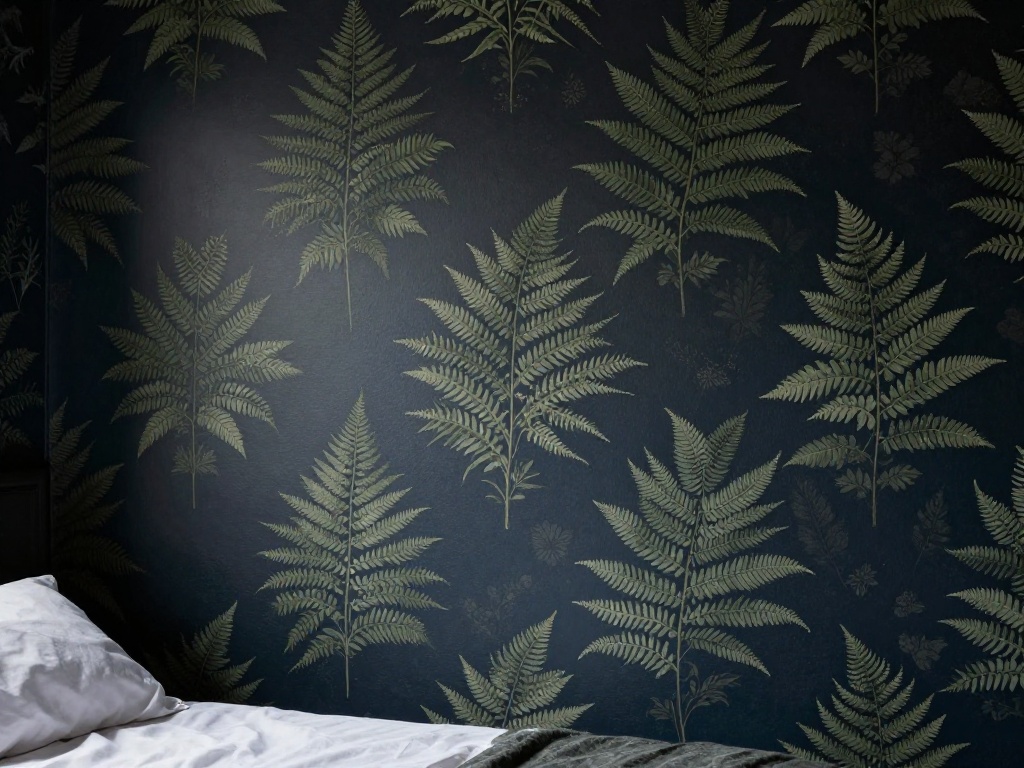
A single accent wall of dark botanical wallpaper—think midnight blue with moody ferns, or charcoal with creeping ivy—delivers the gothic bedroom aesthetic without committing to four walls of pattern. Choose a paper with a matte, non-shiny finish and a repeating motif that’s dense enough to read as texture from across the room but detailed enough to reward close looking. Place it behind the bed or opposite the window to catch the most light. The botanical element introduces a Victorian naturalism that softens the darker tones. A matte finish ensures the pattern doesn’t compete with your lighting sources, while the density of the motif prevents the wall from reading as a single flat dark plane.
Pattern Wins — maximum visual interest with minimum surface coverage; a wallpaper commitment that feels reversible; a natural history museum vibe that pairs with antiques or modern furniture.
Palette + Vibe — deep blue or charcoal background; muted greens or creams in the pattern; a subtle metallic highlight only in the motif, not the background.
This one wall does the heavy thematic lifting so the rest of the room can stay simple.
8. Oversized Floor Mirror In A Dark Frame
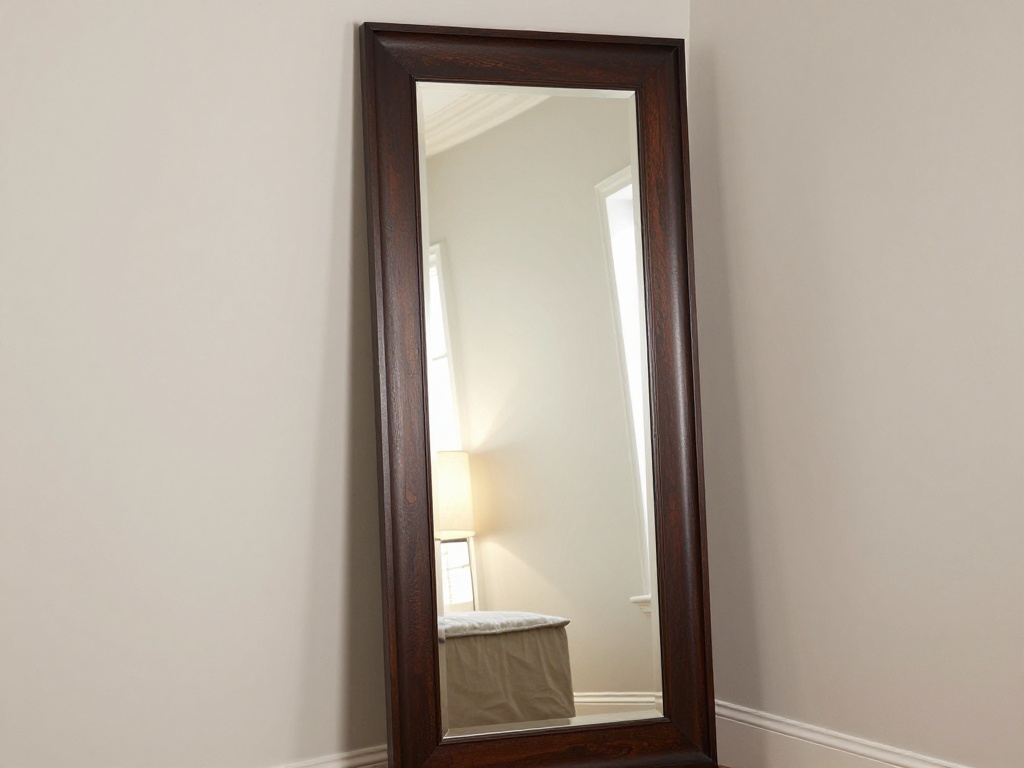
An oversized floor mirror—at least 5 feet tall—with a dark, chunky frame adds a functional focal point. Angle it so it reflects a window, a piece of art, or a lamp, effectively doubling the light and space in a small gothic bedroom or dark corner. The frame itself, whether carved wood, gesso, or resin with a dark patina, adds the kind of substantial visual anchor that a gothic bedroom needs to feel finished. A well-placed mirror is one of the oldest interior design tricks for amplifying both light and square footage. The heavy frame provides counterweight to the reflective surface, ensuring the mirror reads as a piece of furniture rather than a utilitarian afterthought.
Layout Wins — light distribution across the room; a way to check your outfit without a bathroom mirror; a vertical element that breaks up long wall expanses.
Materials + Finish — dark mahogany with a low-sheen finish; resin with a rubbed-back black paint; or a vintage frame with visible wear and age.
It’s equal parts function and sculptural focal point.
9. Deep Plum Or Burgundy Paint On Trim
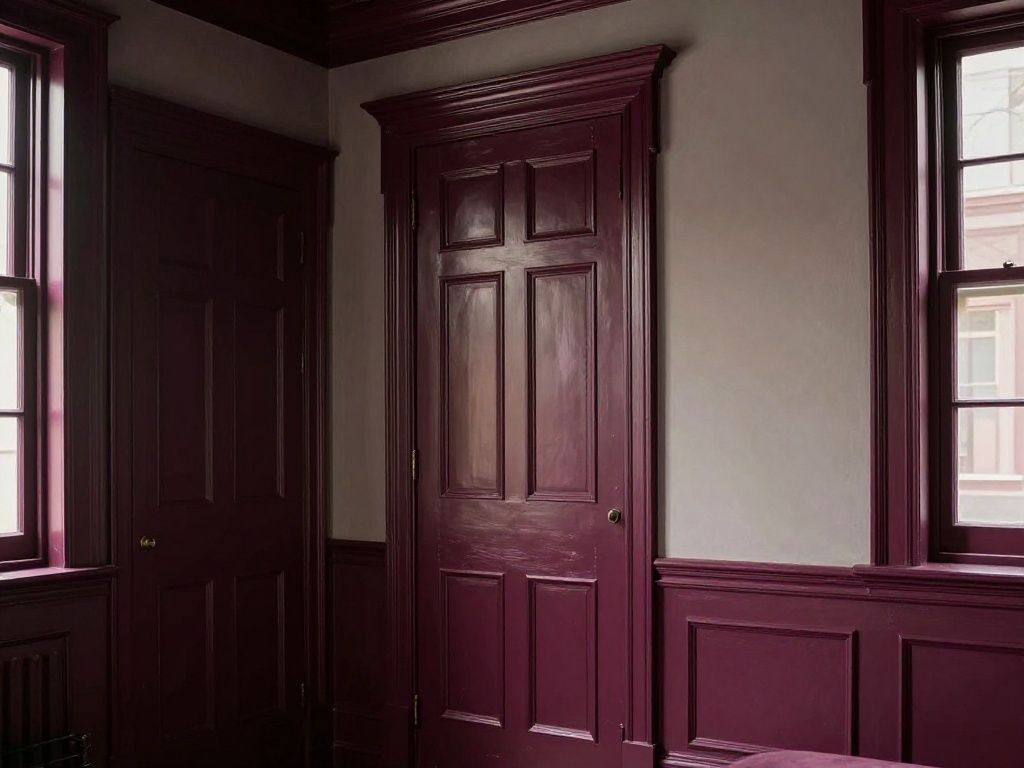
Most gothic bedroom paint jobs put the dark color on the walls and leave the trim white or cream. Flip the script: paint the walls a lighter, warm gray or off-white and paint the trim, doors, and window frames in a deep plum, blackened burgundy, or forest green. This inversion creates a frame-within-a-frame effect, pushing the eye outward to the architectural edges and making the room feel larger while still reading undeniably gothic. This approach is particularly effective in period properties where original moldings deserve emphasis. The dark trim acts like a drawing outline, defining the room’s architecture and making window and door frames pop against the lighter wall surface.
Space Wins — expands a small gothic bedroom visually; draws attention to the architecture; creates a custom, designer look with one extra paint can.
Tones + Highlights — a warm taupe or dove gray wall paired with a dark, saturated trim color; a semigloss finish on the trim to subtly reflect light.
The dark edges define the room without the walls feeling like a coffin.
10. Hanging Dried Florals In A Corner
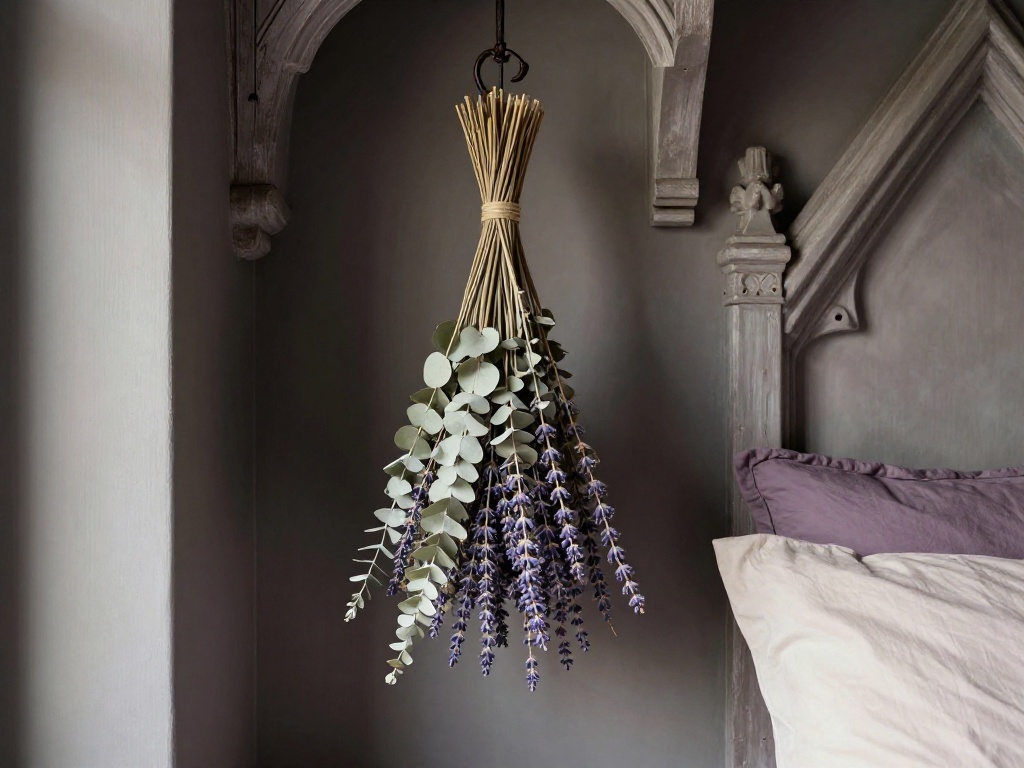
A bundle of dried eucalyptus, lavender, or dyed black preserved florals hung upside down in a corner or above a bedside table introduces organic texture. The dried materials bring a muted, faded color palette—sage, mauve, pale cream—that softens the dark walls and adds a natural, romantic counterpoint. Hang them from a simple dark hook or a salvaged architectural bracket for a gothic bedroom that feels more romantic than macabre. The desiccated quality of the botanicals aligns perfectly with the gothic fascination with decay and transience. The matte, papery texture of dried florals absorbs rather than reflects light, making them a perfect counterbalance to glossy or metallic finishes elsewhere in the room.
Texture Wins — a soft, irregular shape that contrasts with rectangular furniture; a scent layer when using eucalyptus or lavender; a cheap, changeable accent that needs no watering.
Palette + Vibe — muted sage and pale plum; a single white or cream ribbon at the tie; a mix of large and small stems for visual depth.
They read as art, not decor.
11. Layered Area Rugs Over Dark Flooring

A dark floor—whether stained wood, black tile, or dark carpet—can feel like one giant void. Layer a patterned or lighter-toned area rug over it, then place a smaller, faded Persian or kilim on top at an angle. The interplay of patterns and colors—think faded reds, deep indigos, and pale creams—breaks up the darkness and adds a lived-in, collected feel. This is the gothic bedroom version of a cozy lived-in look. The worn, faded quality of antique or vintage rugs introduces a patina that reads as authentic rather than manufactured. The layering also creates a defined zone around the bed, visually separating the sleeping area from the rest of the room without building walls.
Layer Wins — visual breaking-up of a solid dark floor; a way to introduce pattern without wallpaper; instant character in a new-build or rental.
Textures + Accents — a wool flat-weave base rug; a smaller, high-pile or vintage-style top rug; fringe or tassel details on either piece.
Two rugs do what one expensive antique cannot.
12. Glass-Domed Display With Natural Specimens
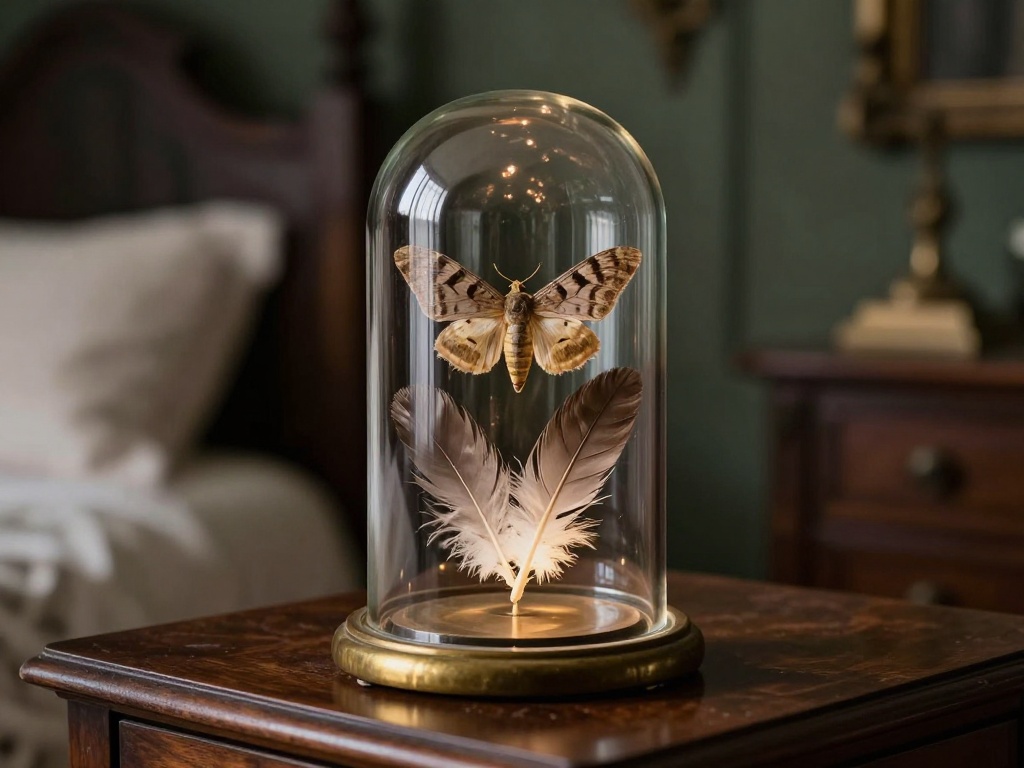
A glass cloche or bell jar atop a dresser or side table, housing a single dried moth, a cluster of feathers, a small taxidermy piece, or a collection of smooth black stones, reads as both scientific and romantic. The glass adds a reflective, airy layer that stops a gothic bedroom from feeling too flat or textile-heavy. Choose a piece that sits slightly elevated—a small wooden base or a brass stand helps it read as intentional rather than curio-cabinet clutter. This display style evokes the Victorian fascination with natural history and cabinet of curiosities aesthetics. The glass dome creates a micro-environment that protects the specimen while making it feel precious and deliberate.
Display Wins — a singular, focused object that draws the eye; a mix of materials that adds shine and transparency; a personal artifact that sparks conversation.
Materials + Finish — clear glass with a slight antique ripple; a darkened wood or brass base; a single specimen per dome for maximum impact.
It’s the one piece of decor that feels like it belongs in a museum, not a catalog.
13. Black Lace Or Crochet Bed Canopy

A soft, black lace or crochet fabric draped from a ceiling hook above the bed—either gathered at the center or cascading over the headboard—creates a romantic, cocooning effect. The open weave of the lace allows light to filter through while still softening the hard lines of the headboard and walls. This gothic bedroom accent works especially well in rooms with high ceilings, where it brings the eye up and fills negative space without blocking anything. The openwork textile introduces delicate craftsmanship and a sense of historical romance. The canopy catches air currents, creating subtle movement that makes the room feel alive and breathing.
Fabric Wins — a light, breathable canopy that doesn’t trap heat; a visual softener for a room with hard edges; a piece that reads as gothic without the weight of velvet.
Textures + Accents — black cotton or polyester lace with a matte finish; a single dark wrought-iron or brass ceiling hook; a thin, dark sheer overlay rather than a heavy drape.
It feels like a Victorian ghost story in the best possible way.
14. Blackened Steel Or Iron Shelf With Styling
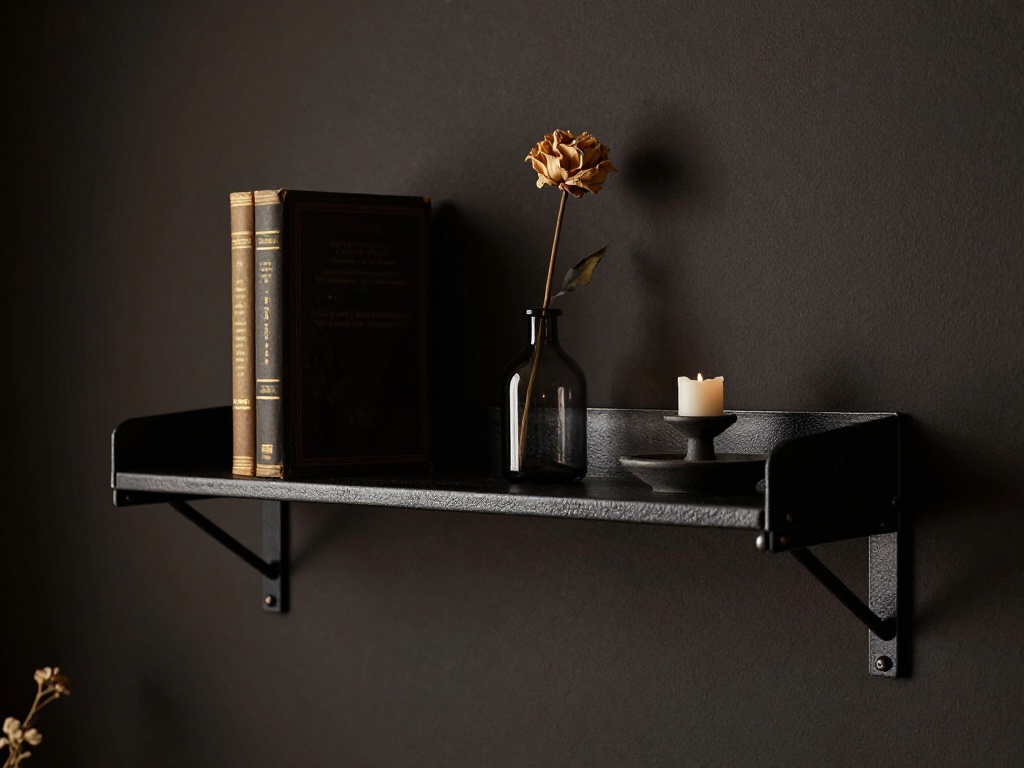
A floating shelf in blackened steel, wrought iron, or dark, heavy wood mounted above a radiator, along a hallway wall, or in a niche, styled with a few carefully chosen objects—a single book, a dried flower stem, a candle holder—adds surface area without floor footprint. The metal’s industrial edge or the wood’s deep grain provides a contrast to softer textiles. A well-styled shelf is the most efficient way to inject personality into any gothic bedroom. The dark, patinated finish reads as architectural rather than decorative. A single shelf at eye level breaks the vertical plane of a dark wall and gives the eye a place to rest, while its styled contents hint at the occupant’s personality and interests.
Storage Wins — vertical storage without bulk; a display surface in a small gothic bedroom; a visual break in a long expanse of dark wall.
Materials + Finish — raw steel with a clear sealer; dark reclaimed wood with visible saw marks; or a prefab iron bracket painted matte black.
Keep the styling to three objects maximum—more reads as clutter, less reads as intentional.
15. Dark-Tinted Glass On Existing Windows
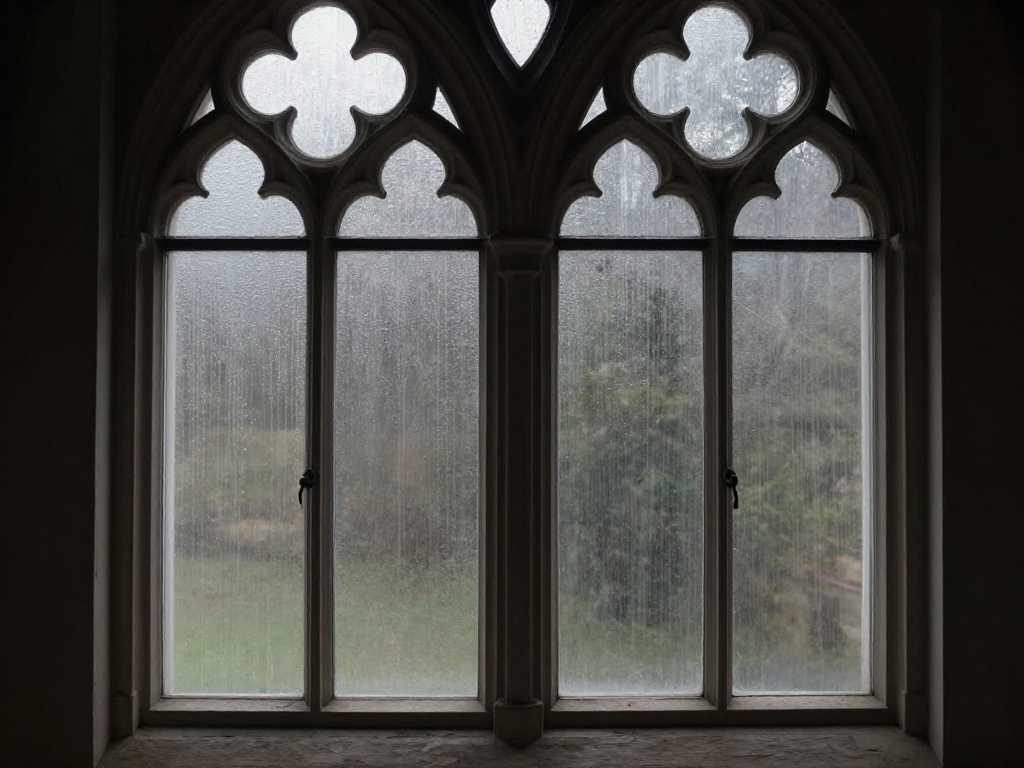
Apply a dark-tinted privacy film to your windows, or swap plain glass for a lightly smoked or gray-tinted pane. The tint knocks back harsh sunlight, softening the room’s natural light to a gray, muted glow that complements dark walls. This is one of the cheapest and most effective ways to shift the entire feel of a gothic bedroom without painting, wallpapering, or replacing a single piece of furniture. The darkened glass creates a twilight ambiance that makes the room feel perpetually atmospheric. Unlike curtains or blinds, the tint doesn’t block the view entirely—it simply filters the light entering the room, giving you privacy without sacrificing the connection to the outdoors.
Lighting Wins — glare reduction without the need for drapes; a soft, diffused daylight that flatters dark finishes; a simple DIY that can be reversed or replaced.
Materials + Finish — a neutral gray or charcoal window film applied cleanly to smooth glass; no pattern or frost—just a consistent tint.
The light that comes in finally matches the mood you’re trying to create.
16. Dark Upholstered Bench At The Foot Of The Bed
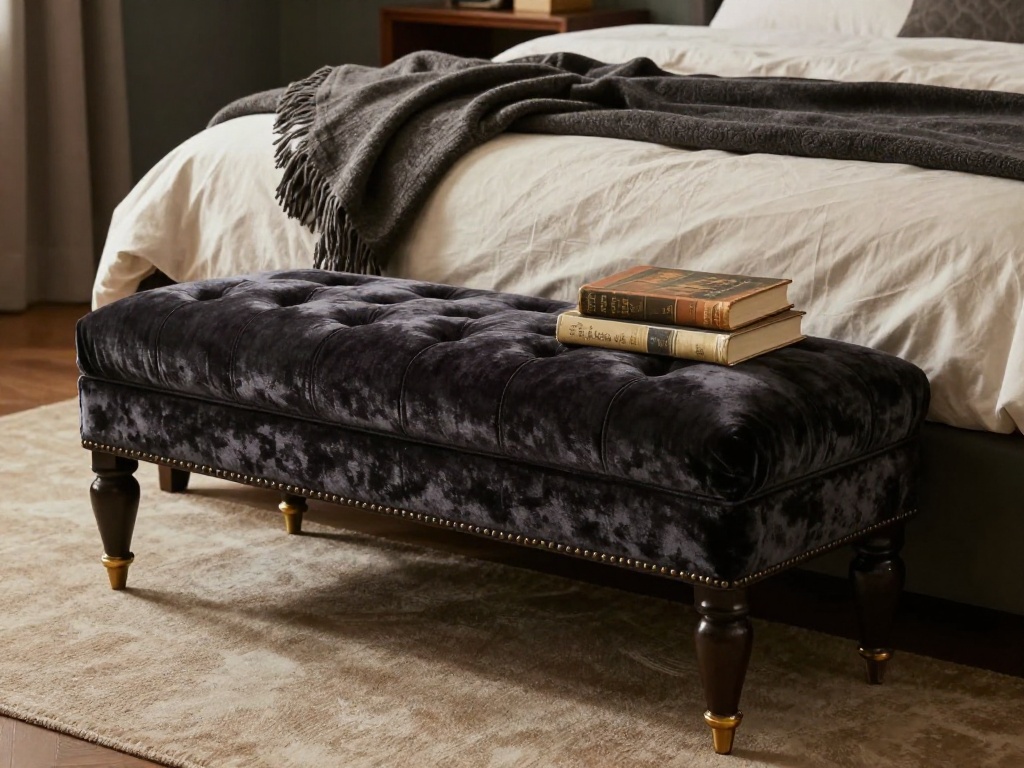
A low bench or storage chest at the foot of the bed, upholstered in a dark velvet or leather, adds a layer that most bedrooms skip. It provides a place to sit while putting on shoes, a landing spot for a folded blanket, or a surface for stacking books. Choose a piece with visible button-tufting or nailhead trim to emphasize the gothic bedroom aesthetic, and keep the legs dark—brass casters or dark wood. The tufted upholstery adds a Chesterfield-inspired grandeur that elevates the entire room. A bench also anchors the bed visually, especially in rooms where the bed itself sits low to the floor, creating a sense of completion and intentionality.
Storage + Layout Wins — a multi-functional piece that anchors the bed visually; extra seating in a room that usually lacks it; a place to stash extra pillows and throws.
Textures + Accents — velvet or leather in black, deep green, or plum; visible tufting or a diamond pattern; legs in matte black or a soft, aged brass.
A bench turns the foot of the bed into a destination, not a dead zone.
17. Single Oversized Artwork In A Dark Frame
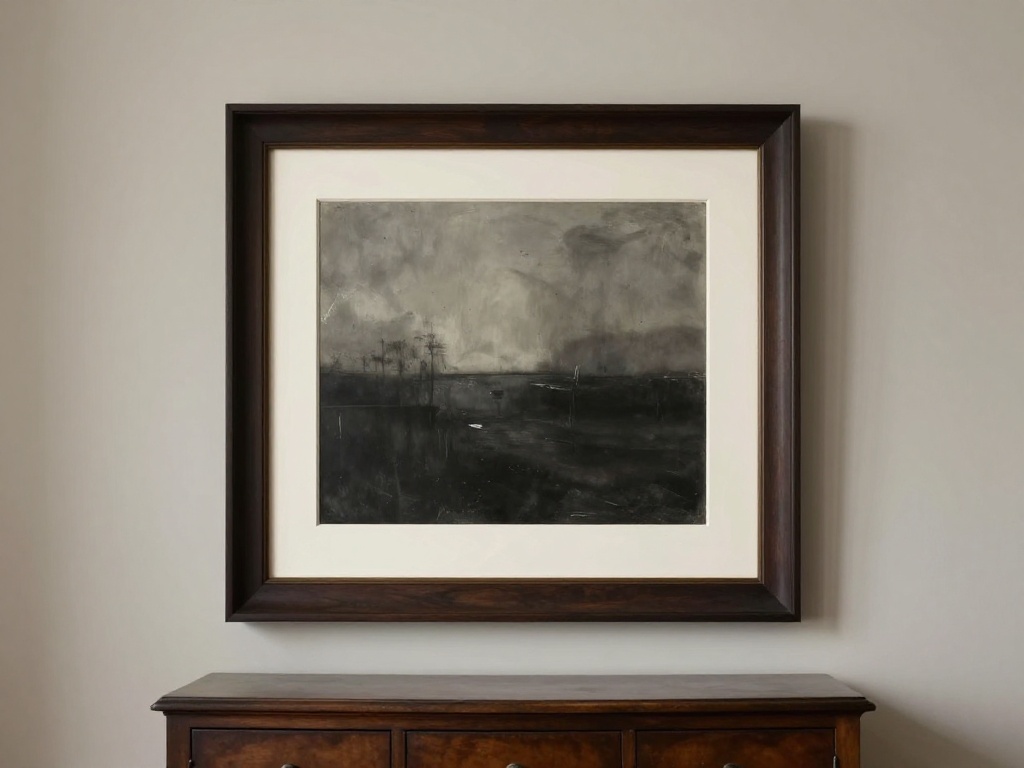
Skip the gallery wall and commit to one oversized piece of art—a dark landscape, an abstract in muted grays and blacks, or a printed vintage botanical plate—in a thick, dark frame. Mount it off-center above a low dresser or on a large wall with nothing else. The singular piece reads as more intentional and more collected than a grid of smaller frames. This is the one move that immediately makes any gothic bedroom look curated. The large scale signals confidence and allows the dark tones to truly read. A single framed piece creates a visual hierarchy that tells the viewer exactly where to look, while the dark frame echoes other architectural elements in the room.
Space Wins — maximum visual impact with minimal clutter; a clear focal point that doesn’t compete; a statement that works in any room size.
Materials + Finish — a matte or low-sheen print on textured paper; a solid wood frame painted black or dark walnut; a white or cream mat to separate the art from the dark frame.
One large, dark piece of art makes a room feel instantly finished.
18. Black Candle Pillars Of Varying Heights
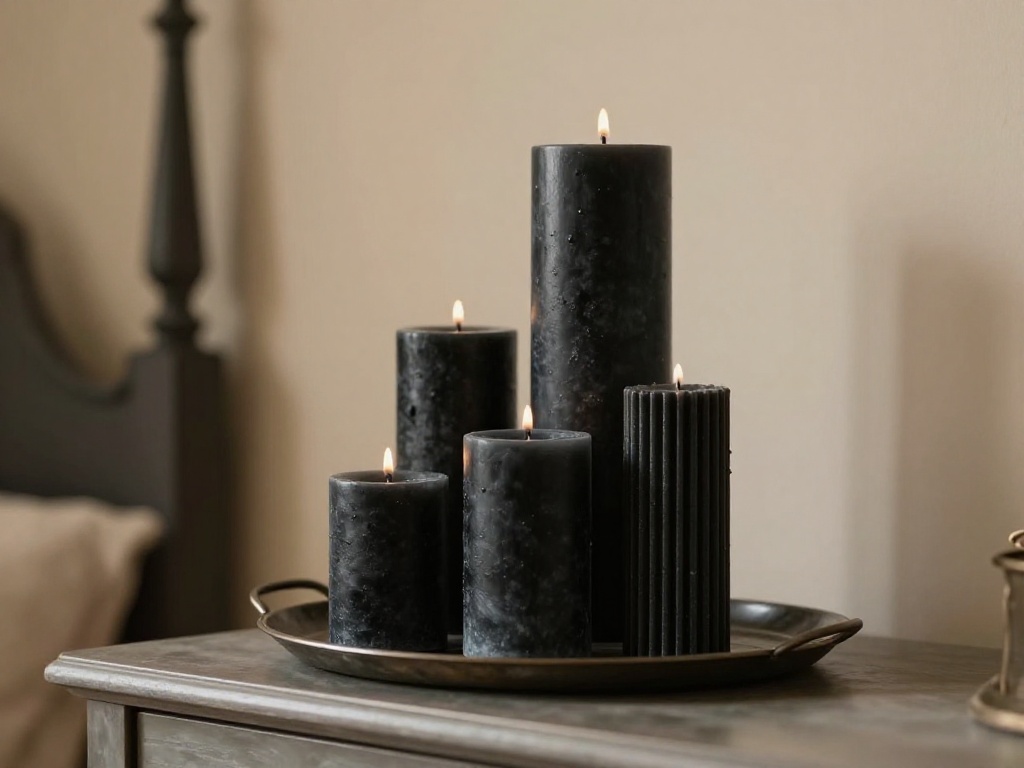
A cluster of three or four black taper candles or pillar candles, placed together on a metal tray or a stone slab, creates a simple, sculptural centerpiece for a dresser, side table, or mantel. The varying heights—from a short 3-inch pillar to an 18-inch taper—create a rhythm, and the unlit candles act as black sculptural objects even when not in use. In a gothic bedroom, this is the most affordable way to achieve the layered, romantic look of a high-end mood board. The dark wax creates an elegant contrast against lighter surfaces and adds a sense of ritual. The grouping technique relies on the principle of odd numbers and varied scale to create visual interest without requiring ornament or pattern.
Styling Wins — a centerpiece that costs under $30; a piece that works day and night; a sculptural grouping that repeats the dark palette without competing with other elements.
Materials + Finish — matte black or charcoal wax; a dark metal or black stone tray; a mix of textures—smooth pillars next to ribbed or carved tapers.
Light them sparingly; they look better as objects than as actual light sources.
Frequently Asked Questions
What colors go with a gothic bedroom?
Black, charcoal, deep plum, forest green, burgundy, and muted ivories or warm grays keep the mood dark while providing subtle contrast.
Can you do a gothic bedroom in a small room?
Yes—paint walls a lighter color and use dark trim, add a large mirror to reflect light, and choose a simple dark bed frame that doesn’t overwhelm the floor.
How do you make a gothic bedroom look cozy, not scary?
Layer textiles, use warm dim light sources, and include natural elements like dried florals or wood to soften dark walls and add tactile comfort.
What is the difference between gothic and Victorian bedroom style?
Victorian favors ornate pattern and heavy upholstery; gothic leans toward architectural shapes, darker tones, and a romantic, melancholic mood that emphasizes atmosphere over ornament.
What furniture is needed for a gothic bedroom?
A dark bed frame, one substantial storage piece, a mirror, and either a bench or accent chair—keep it minimal and let the dark palette create the atmosphere.
The Takeaway
The difference between a Pinterest screenshot and a room you actually love comes down to materials and restraint. Pick two or three of these gothic bedroom ideas that fit your actual space and budget, execute them with the right finishes, and stop adding pieces—the room will feel complete faster than you think. Start with the one change that addresses your biggest lighting or spatial issue, and let the rest follow naturally from there.

Haseeb Lali covers the Bathroom and Kitchen categories at CozyDecoNest, focusing on functional design that doesn’t sacrifice style. He specializes in space-saving storage solutions, small-bathroom upgrades, and kitchen organization ideas that work in real-world homes, not just showrooms. Haseeb’s approach blends practical DIY know-how with an eye for finishes and layouts that stand the test of daily use.