
A mid century modern living room comes down to a specific set of mid-century modern interior design characteristics: warm wood tones, clean lines, and gently curved silhouettes that read as collected instead of costume-y. If you’re pulling mid century modern living room photos for a Pinterest board, the 19 ideas below each show a version of the look you can actually recreate, from bold color moments to quiet, furniture-led updates.
1. Walnut Wood Paneled Accent Wall With Built-In Shelving
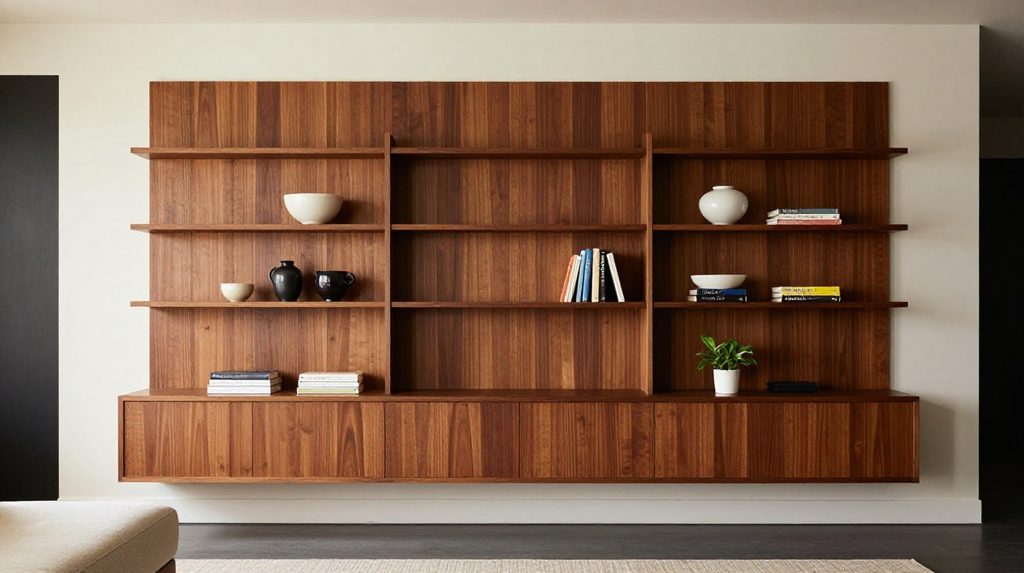
A slatted walnut wall instantly reads as mid century modern without touching another surface in the room. It works especially well behind a TV or sofa, where the wood grain becomes the focal point instead of a blank wall. Built-in shelving breaks up the panels and gives you a spot for books and ceramics without cluttering the floor.
Color Palette
- Warm walnut or teak brown
- Soft white or cream walls
- Muted black accents
Key Pieces
Look for tongue-and-groove wood paneling or pre-made slat panels in a warm walnut finish. Pair it with open shelving in the same wood tone so the whole wall reads as one built piece rather than two competing materials.
Styling Tips
Keep the shelves loosely styled with ceramics, a few books, and one plant rather than packed full. Let negative space do some of the work so the wood grain stays the star.
This idea suits anyone who wants a strong statement wall without adding more furniture to a small room.
2. Sunken Conversation Pit With Curved Boucle Seating
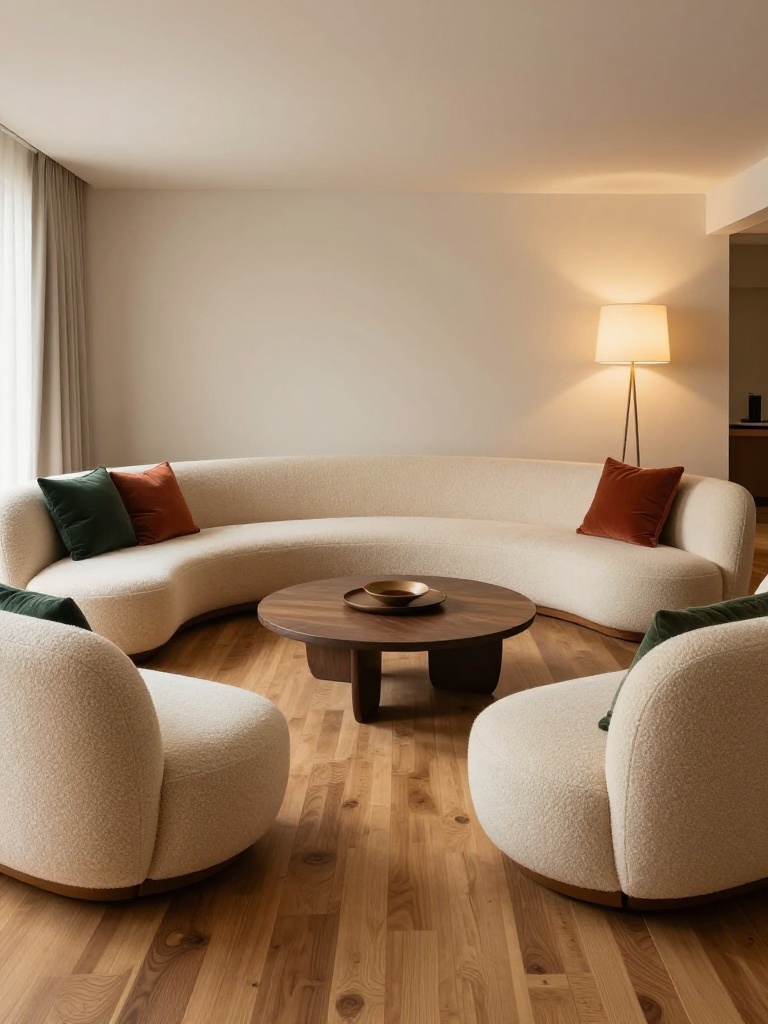
The conversation pit is one of the most recognizable mid-century modern living room features, and a soft, curved version brings it into a more livable, current space. Instead of a hard architectural sink, a shallow step-down or a curved sectional can mimic the look. The low, wraparound seating puts everyone at the same conversation height and within arm’s reach of the center table, which is what actually makes group hosting easier than a row of chairs facing one sofa.
Color Palette
- Cream or oatmeal boucle
- Warm wood flooring
- Deep green or rust accents
Key Pieces
A curved, low-profile sectional in a nubby boucle or wool-blend fabric does most of the work here. Add a round or kidney-shaped coffee table in the center so the seating wraps around a single, low anchor point.
Styling Tips
Keep cushions minimal and let the curve of the sofa be the visual interest. A single sculptural floor lamp nearby adds height without breaking the low, grounded feel.
This works best for anyone building a dedicated lounge or media corner rather than a formal, pass-through living room.
3. Burnt Orange And Olive Green Color Palette Living Room
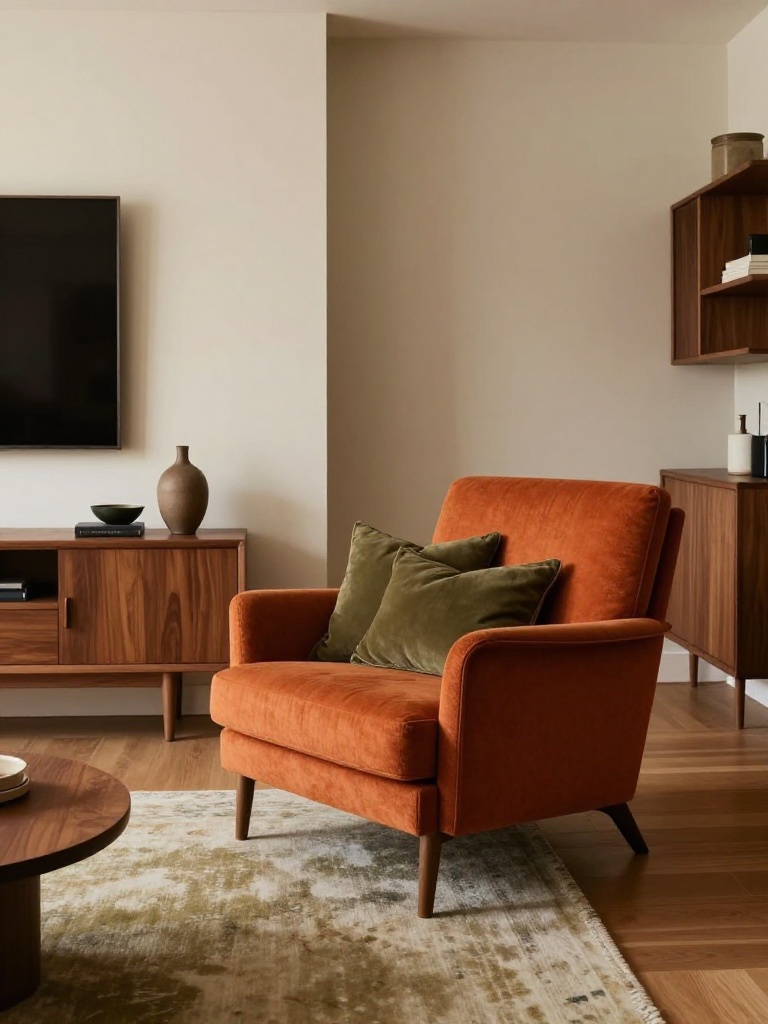
This is one of the boldest ways to bring mid century modern color into a living room without it feeling like a theme party. Burnt orange and olive green were everywhere in original mid-century interiors, and used with restraint, they still feel current. A neutral base keeps the combination from overwhelming the space.
Color Palette
- Burnt orange upholstery or pillows
- Olive or deep green accents
- Warm neutral walls and wood tones
Key Pieces
A single upholstered piece — a chair or sofa — carries one of the two colors, while the other shows up in smaller doses through pillows, a rug, or ceramics. Wood furniture in walnut or teak ties both colors together.
Styling Tips
Use the 60/30/10 rule: neutral walls and floors as the majority, one color as the supporting tone, and the second as a small accent. Avoid using both colors at equal weight, or the room starts to feel busy.
This palette suits anyone who wants a warm, saturated look without repainting every wall.
4. Teak Wood Coffee Table With Hairpin Legs
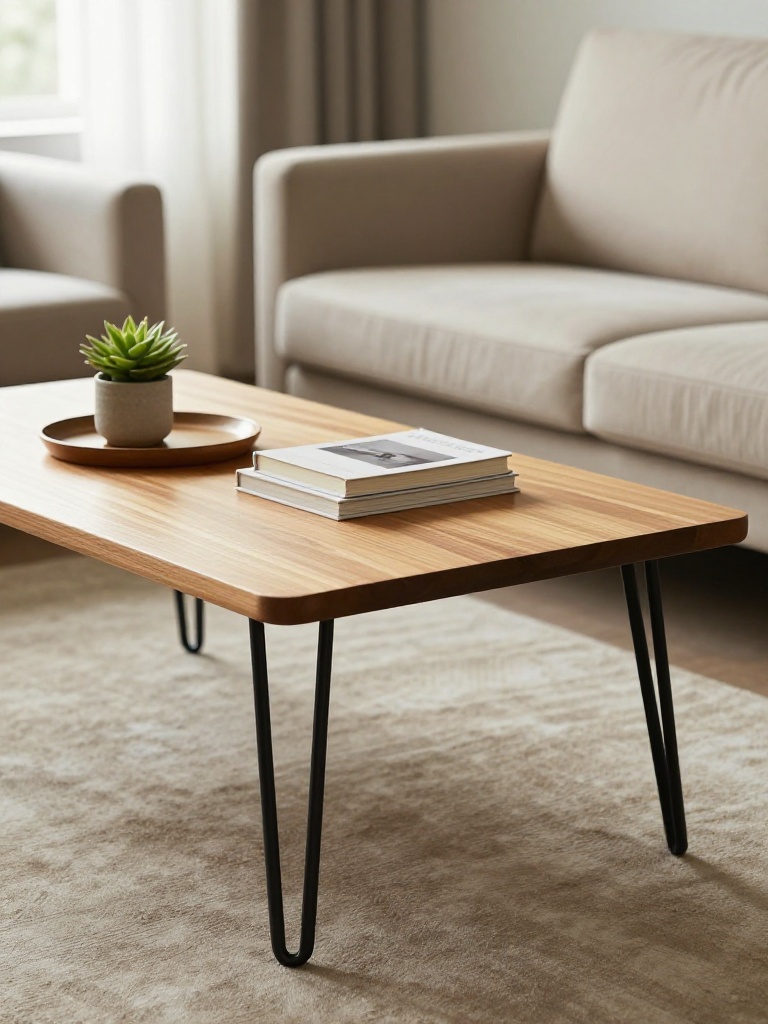
A teak coffee table with thin, angled hairpin legs is one of the easiest single-piece ways to add mid century modern character to an existing room. The light, airy legs keep the piece from feeling heavy, even in a smaller living room. It works with almost any sofa style already in the space.
Color Palette
- Golden teak or light walnut
- Black or brass hairpin legs
- Neutral surrounding furniture
Key Pieces
Choose a rectangular or oval top in solid wood rather than veneer, since the grain is part of the appeal up close. Brass or matte black legs both work, depending on whether the rest of the room leans warm or cool.
Styling Tips
Keep the tabletop styled with two or three objects at varying heights — a tray, a small plant, a stack of books — rather than one centered object. Leave at least a third of the surface bare so the wood grain stays visible instead of getting crowded out.
This is a low-commitment way to try the style, since swapping in one coffee table doesn’t require repainting a wall or replacing anything else already in the room.
5. Retro Starburst Wall Clock Above A Low Media Console
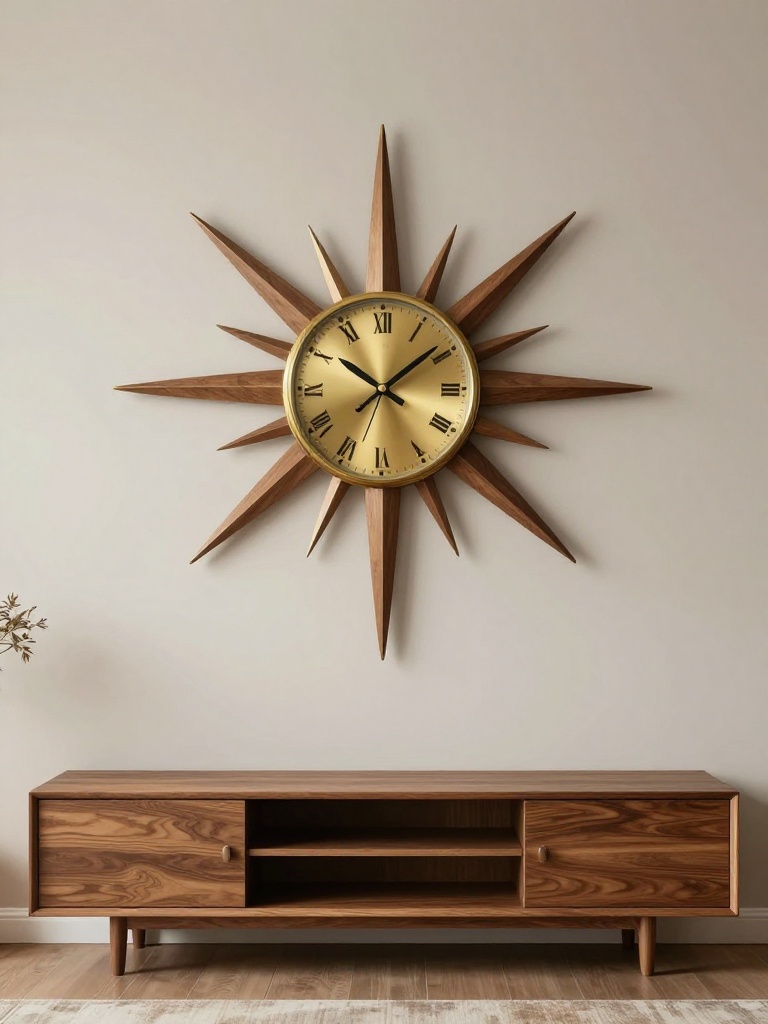
A starburst clock is a small, affordable way to nod to mid-century modern design without a major purchase. Hung above a low, horizontal media console, it echoes the sunburst motifs common in original 1950s and ’60s interiors. The round shape also softens a room full of straight-lined furniture.
Color Palette
- Brass, gold, or walnut clock frame
- Warm wood console
- Neutral wall backdrop
Key Pieces
Look for a clock with slim, spoke-like rays in wood or metal, sized to feel proportional to the console below it — roughly a third to half the width of the piece it sits above. A mix of finish and length across the spokes, rather than a uniform pattern, keeps it from reading as a mass-produced reproduction.
Styling Tips
Center the clock over the console rather than off to one side, and resist the urge to surround it with other wall art. It reads best with breathing room around it.
This works because a single wall clock takes less time to hang and costs less than almost any other update on this list.
6. Tan Leather Sling Chair In A Reading Nook
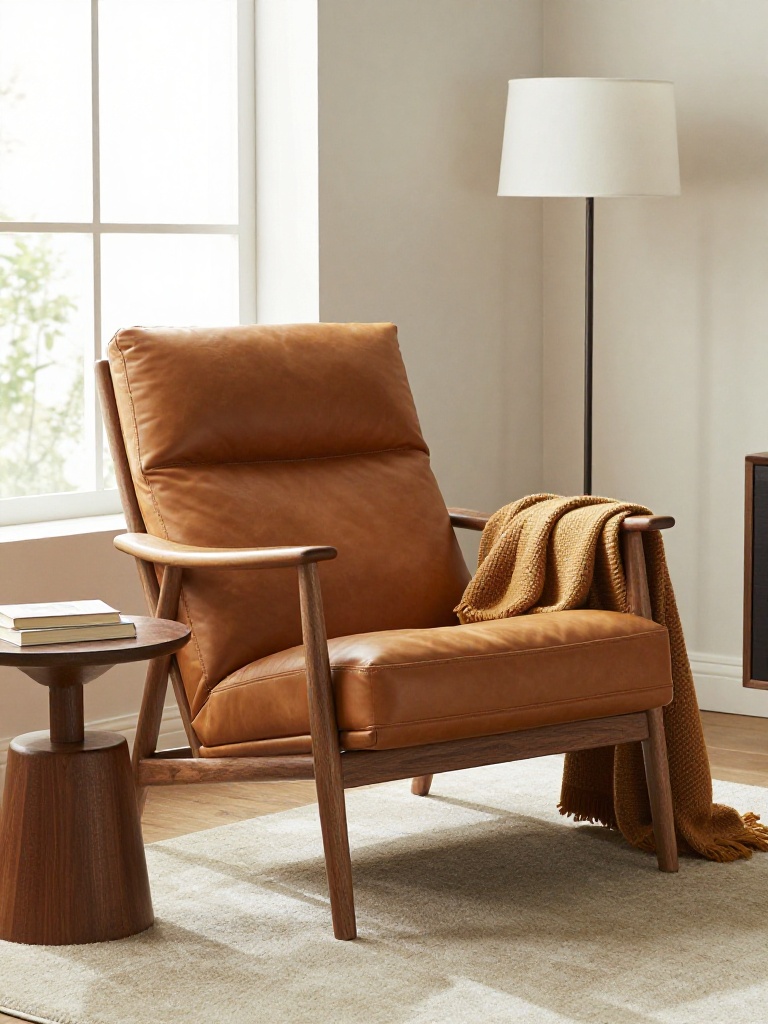
A leather sling chair is one of the most identifiable pieces in mid century modern furniture, and it’s an easy way to add a reading corner to an underused space. The taut leather seat and simple wood frame keep the look light rather than bulky. It works well tucked near a window or in an awkward corner other furniture doesn’t fit.
Color Palette
- Cognac or tan leather
- Natural wood frame
- Soft neutral rug underfoot
Key Pieces
Choose a chair with a wood frame in walnut or oak and a single sling seat in leather or a heavy woven fabric. A small round side table nearby keeps the corner functional.
Styling Tips
Add one warm-toned throw and a floor lamp with a simple, tapered shade rather than layering in extra seating. Keep the side table low enough that it doesn’t block the chair’s sightline into the rest of the room.
This works especially well for smaller apartments where a full reading nook isn’t realistic.
7. Geometric Terrazzo Area Rug Over Hardwood Floors
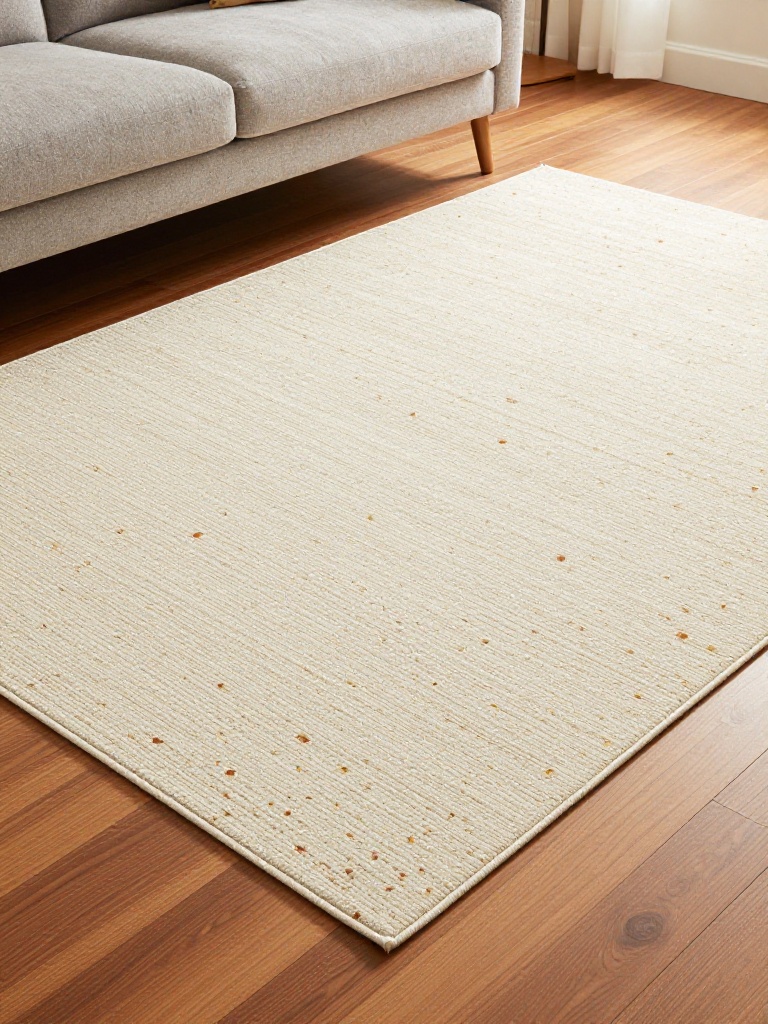
A terrazzo-patterned rug brings a mid-century modern graphic quality to a living room without requiring any furniture changes. The speckled, geometric pattern was common in mid-century flooring and textiles, and a rug version lets you borrow the look underfoot. The speckled pattern also adds enough visual weight at floor level to anchor a room where the furniture is mostly light wood, which can otherwise look visually thin.
Color Palette
- Cream or stone base
- Flecks of rust, mustard, or navy
- Warm wood flooring beneath
Key Pieces
Look for a low-pile rug in a muted terrazzo or speckled pattern rather than a high-contrast version, which can read more modern than mid-century. A wool or wool-blend construction holds its color better underfoot than a synthetic fiber, which matters in a high-traffic living room.
Styling Tips
Size the rug so all the front legs of your seating sit on it, and keep other patterns in the room simple so the rug doesn’t compete with a busy sofa fabric. Rotate the rug every few months if it sits in direct sunlight, since terrazzo patterns can fade unevenly.
This suits anyone with hardwood floors who wants pattern without committing to bold upholstery.
8. Vintage Brass Arc Floor Lamp Beside A Tufted Sofa
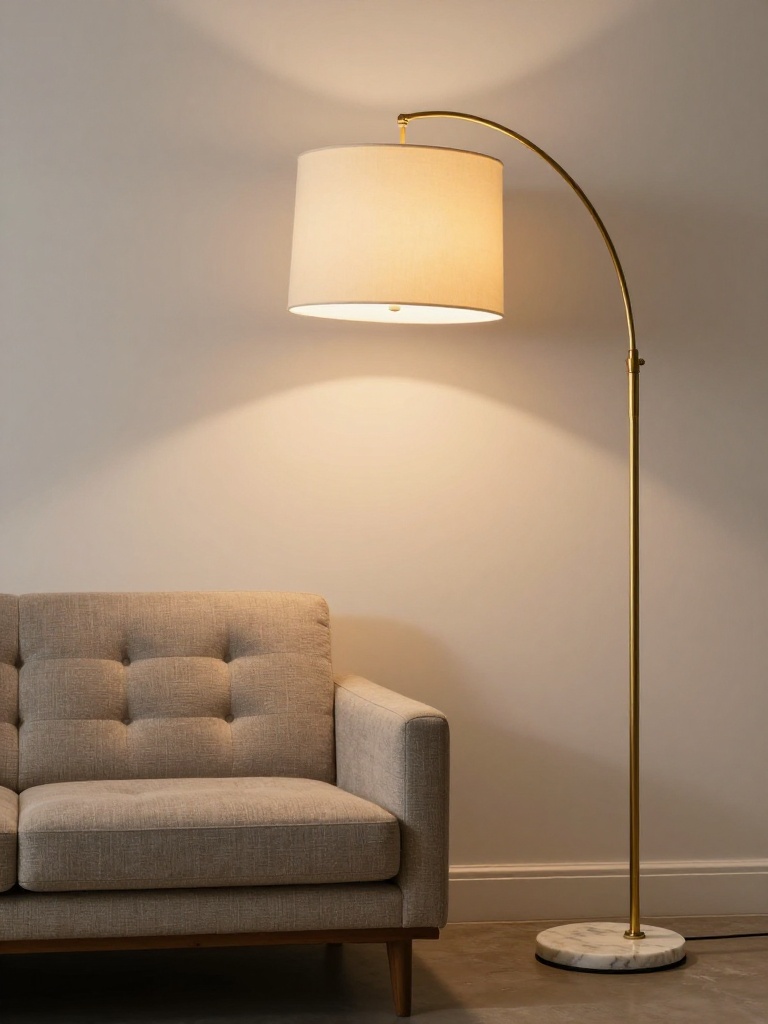
An arc floor lamp with a slim brass pole is a classic mid century modern lighting choice that adds vertical height a low, horizontal sofa can’t provide on its own. Its curved arm lets the light hang directly over a seating area without a table lamp taking up side-table space. It’s also one of the more sculptural pieces you can add to a room.
Color Palette
- Warm brass or aged brass finish
- Marble or weighted stone base
- Neutral shade in white or cream
Key Pieces
Look for a lamp with a substantial marble or stone base for stability, since taller arc lamps need real weight underneath. A simple drum or cone shade keeps the focus on the arm itself.
Styling Tips
Position the arm so the light falls over one end of the sofa, ideally near a reading spot, rather than centered over the whole piece. Leave at least two feet of clearance around the base so it doesn’t become a tripping hazard in a walkway.
This idea suits low-slung, mid-century sofas that otherwise sit under-lit in the evening.
9. Mustard Yellow Velvet Sofa With Black Metal Legs
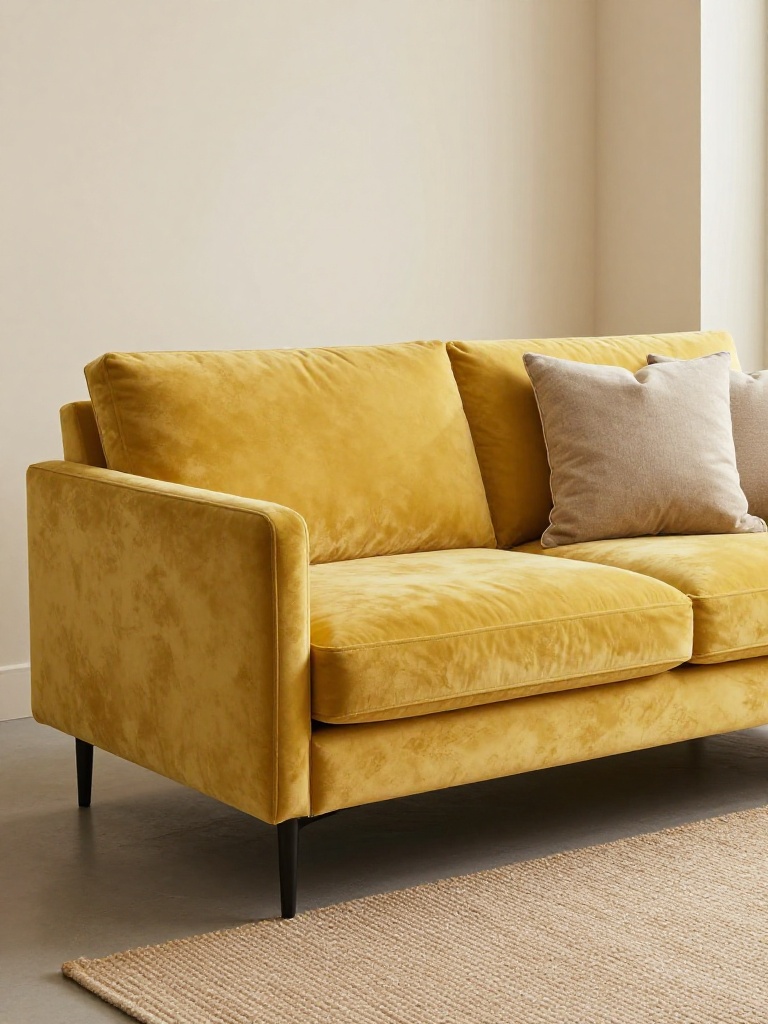
A mustard velvet sofa is one of the more confident mid century modern living room choices, but it earns its place because the color has real precedent in original mid-century palettes. Black tapered or angled metal legs keep the piece from feeling too soft or heavy. It works as the anchor piece in an otherwise neutral room.
Color Palette
- Mustard or ochre velvet
- Black or dark walnut legs
- Cream, white, or greige walls
Key Pieces
Choose a sofa with clean, tailored lines rather than an overstuffed silhouette, since boxier shapes read more true to the era. Velvet or a nubby wool-blend both work.
Styling Tips
Balance the bold color with plain, textured pillows in cream or oatmeal rather than another patterned fabric, so the sofa stays the single loudest element in the room. A jute or wool rug underneath grounds the color without adding another competing tone.
This works because the sofa’s color carries the whole room, so the walls, floors, and other furniture can stay plain without the space reading as unfinished.
10. Room Divider Screen With Slatted Wood Panels
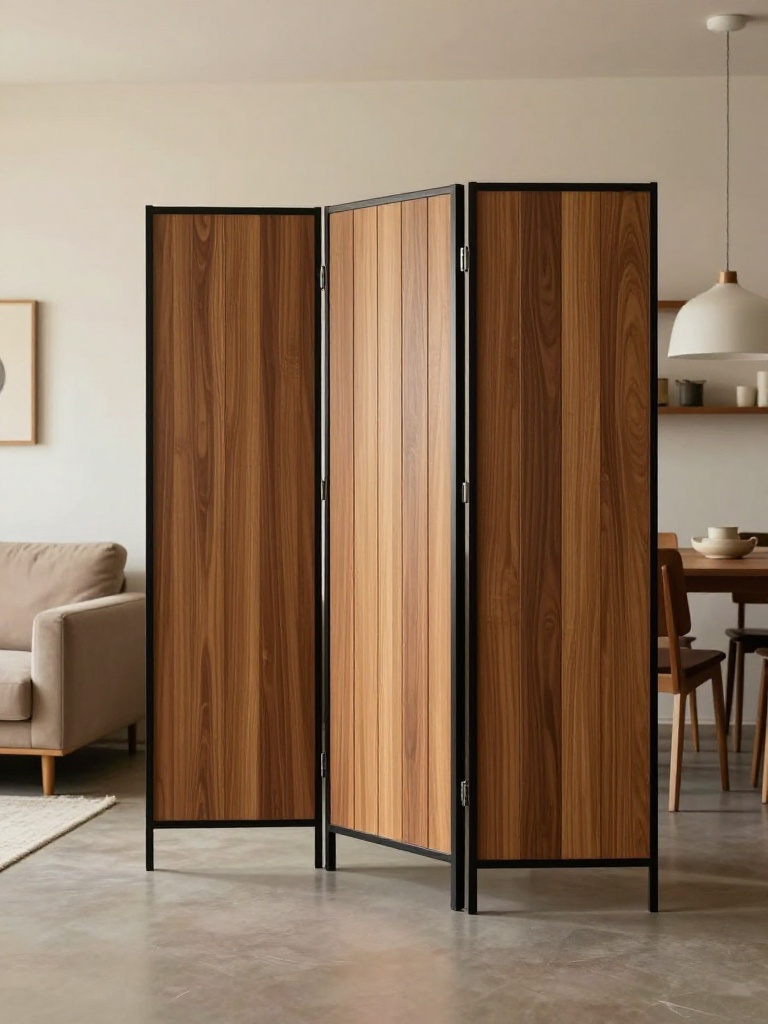
A freestanding slatted wood screen is a practical, mid-century modern way to define zones in an open-plan living room without adding a wall. It filters light and sightlines while still letting the space feel connected. It’s especially useful in studio apartments or open-concept homes.
Color Palette
- Natural or walnut-stained wood slats
- Black metal frame accents
- Neutral surrounding walls
Key Pieces
Look for a folding screen with evenly spaced vertical slats in solid wood, sized to reach close to ceiling height for the most impact. Three or four hinged panels give enough width to block a sightline fully without looking flimsy when folded partway.
Styling Tips
Angle the panels slightly rather than keeping them flat against a wall, which helps the screen read as a design feature rather than an afterthought. Leave a few inches of gap between the bottom of the panels and the floor so it doesn’t feel like a solid wall.
This idea suits anyone needing to visually separate a living area from a dining or sleeping space.
11. Atomic Age Pendant Light Cluster Over A Seating Area
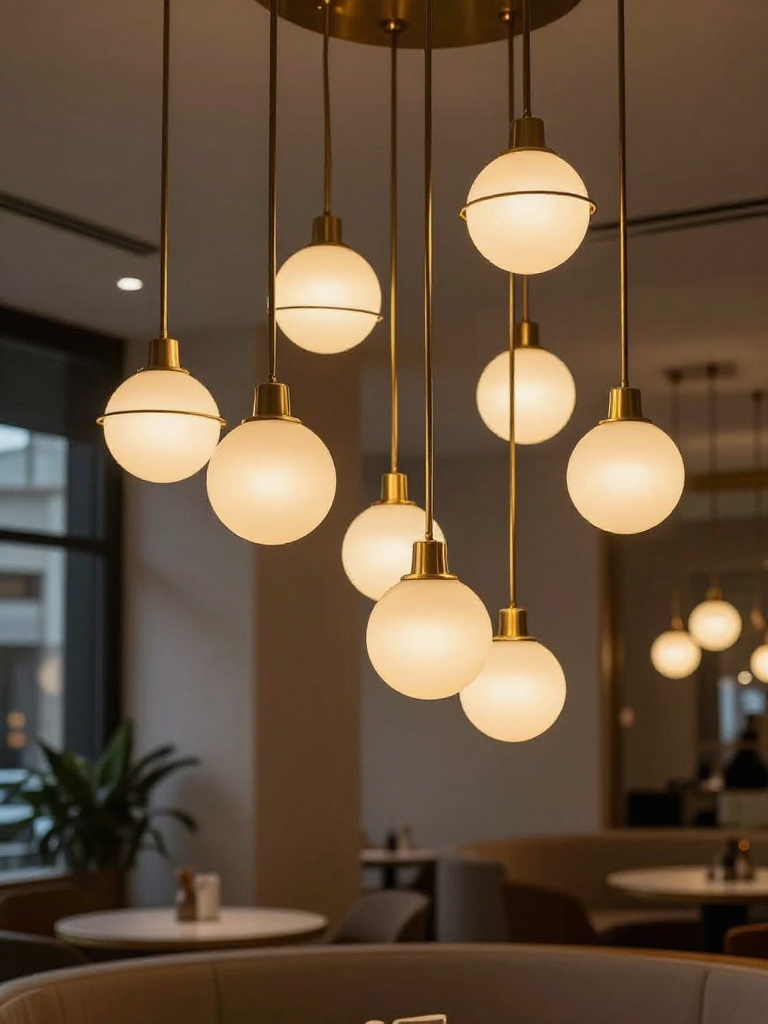
A cluster of small globe or atomic-style pendants brings genuine mid century modern character to a living room ceiling, which is often the most overlooked surface in the room. Grouped at varying heights, they create visual interest without a single oversized fixture dominating the space.
Color Palette
- Brass or matte black fixtures
- Opal or smoked glass globes
- Warm ceiling and wall tones
Key Pieces
Choose three to five small pendant globes on a shared canopy or individually hung at staggered lengths, in brass or blackened metal. Vary the drop length by four to six inches between fixtures so the cluster reads as intentional rather than uneven.
Styling Tips
Cluster the pendants over a specific zone — a seating group or reading corner — rather than centering them in the room, so the lighting feels intentional rather than decorative filler. Keep the lowest globe at least seven feet off the ground so it doesn’t interfere with anyone standing underneath.
This works best in rooms with higher ceilings, where a single low pendant would otherwise feel lost.
12. Curved Kidney-Shaped Coffee Table In A Neutral Living Room
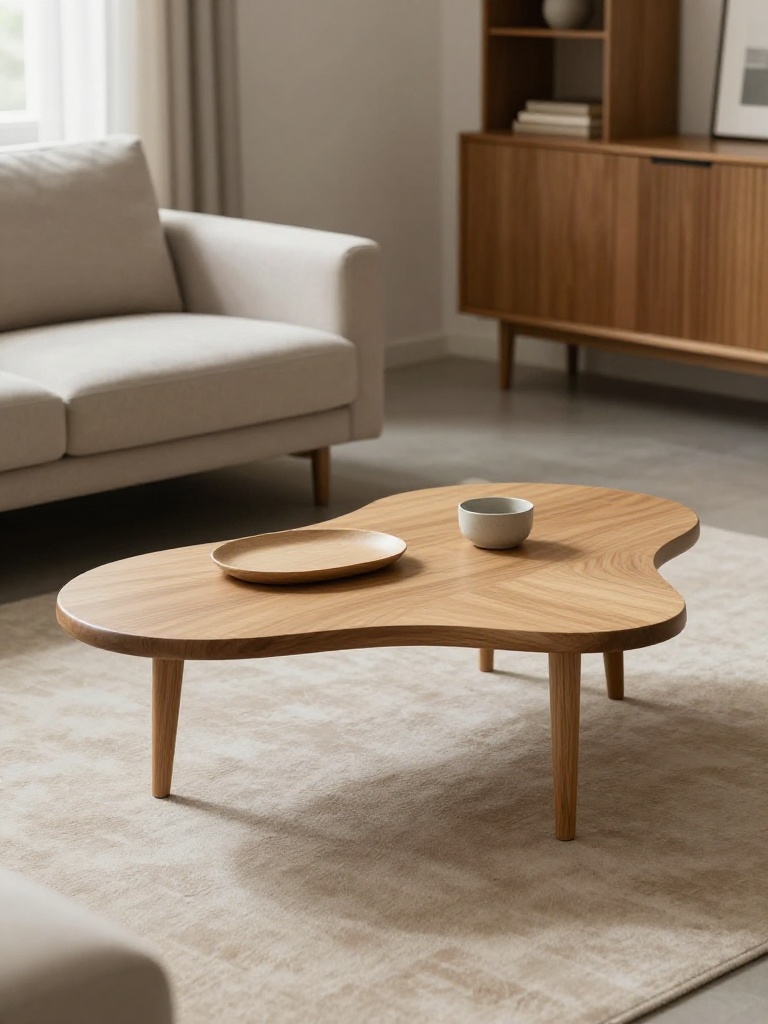
The kidney or biomorphic shape is a signature of mid-century modern design, and a curved coffee table is one of the easiest ways to bring that organic line into an otherwise square, boxy living room. It softens a space full of straight-edged sofas and shelving.
Color Palette
- Light oak or walnut wood
- Neutral surrounding upholstery
- One small warm accent color
Key Pieces
Look for a solid wood or wood-veneer top in an asymmetrical, rounded shape, ideally raised on thin tapered legs rather than a heavy pedestal base. A slightly irregular curve, rather than a perfectly symmetrical kidney outline, reads as closer to an original mid-century piece.
Styling Tips
Let the shape of the table do the visual work, and keep the styling on top minimal — one tray, one object — so the curve stays visible. Position it a few inches off-center from the sofa rather than perfectly aligned, echoing the asymmetry of the shape itself.
This idea suits living rooms that already feel a little too rectangular or matchy.
13. Mid Century Modern Bar Cart With Brass Accents
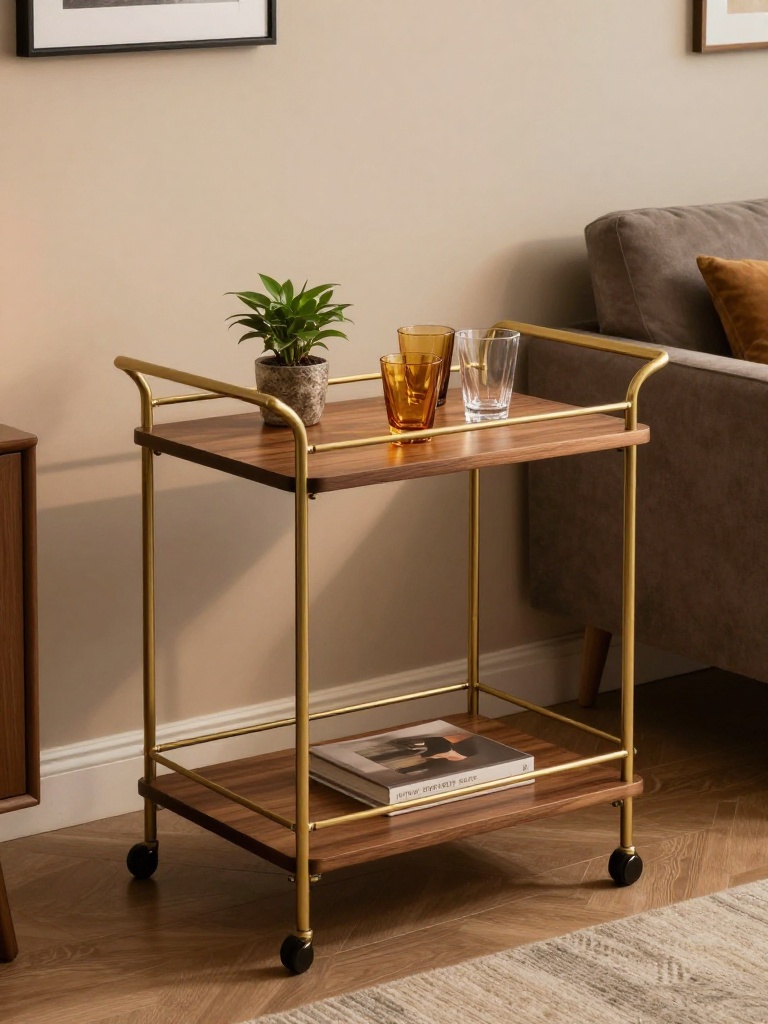
A rolling bar cart with a wood top and brass frame is a space-efficient way to add mid century modern function to a living room corner. It gives you a defined spot for glassware and drinks without a full built-in bar, and it can double as a plant or display stand when not in use.
Color Palette
- Brass or gold-toned frame
- Warm wood shelf
- Clear or amber glassware
Key Pieces
Choose a two-tier cart with a solid wood top shelf and a thin brass or blackened-metal frame, sized to tuck into a corner rather than block a walkway. Locking casters make it easier to roll the cart out for use and tuck it back against the wall afterward.
Styling Tips
Style it with a handful of glass pieces and one plant rather than fully stocking every shelf, so it still reads as furniture rather than storage. Group items by height on the top shelf so the display reads as arranged rather than simply set down.
This works well for anyone who entertains occasionally but doesn’t want a permanent bar setup.
14. Floor-To-Ceiling Windows With Sheer Linen Curtains
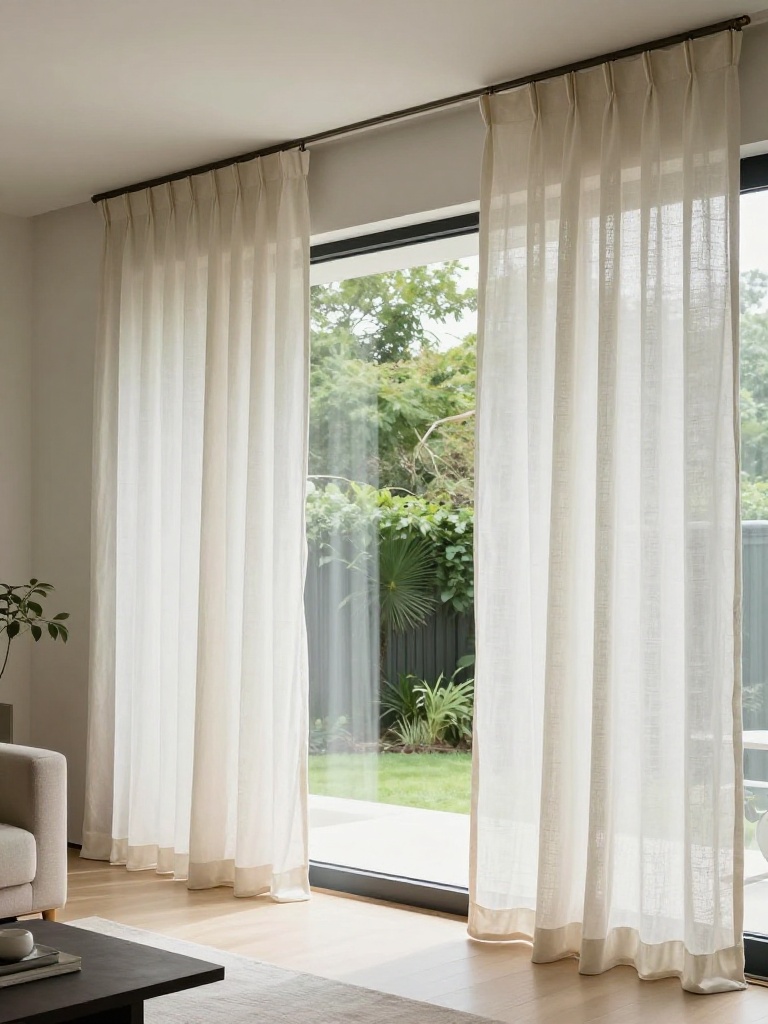
Mid-century architecture leaned heavily on connecting indoor and outdoor space, and sheer linen curtains on floor-to-ceiling windows keep that mid-century modern living room feeling intact even in a standard-height room. The linen filters light without blocking the view the way heavier drapery would.
Color Palette
- Natural or off-white linen
- Warm wood window trim
- Greenery visible through the glass
Key Pieces
Look for lightweight, unlined linen panels hung close to the ceiling line, on a slim black or brass rod rather than an ornate one. Mounting the rod just below the ceiling, rather than at the top of the window frame, adds height and makes the window feel larger.
Styling Tips
Hang the panels wide of the window frame so they don’t block light when open, and let them puddle slightly at the floor for a softer line. A few inches of fabric pooling at the base reads as intentional, while more than that starts to look like the curtains are simply too long.
This idea suits any room with decent natural light that currently feels a bit closed off with heavier curtains.
15. Gallery Wall Of Abstract Mid Century Art Prints
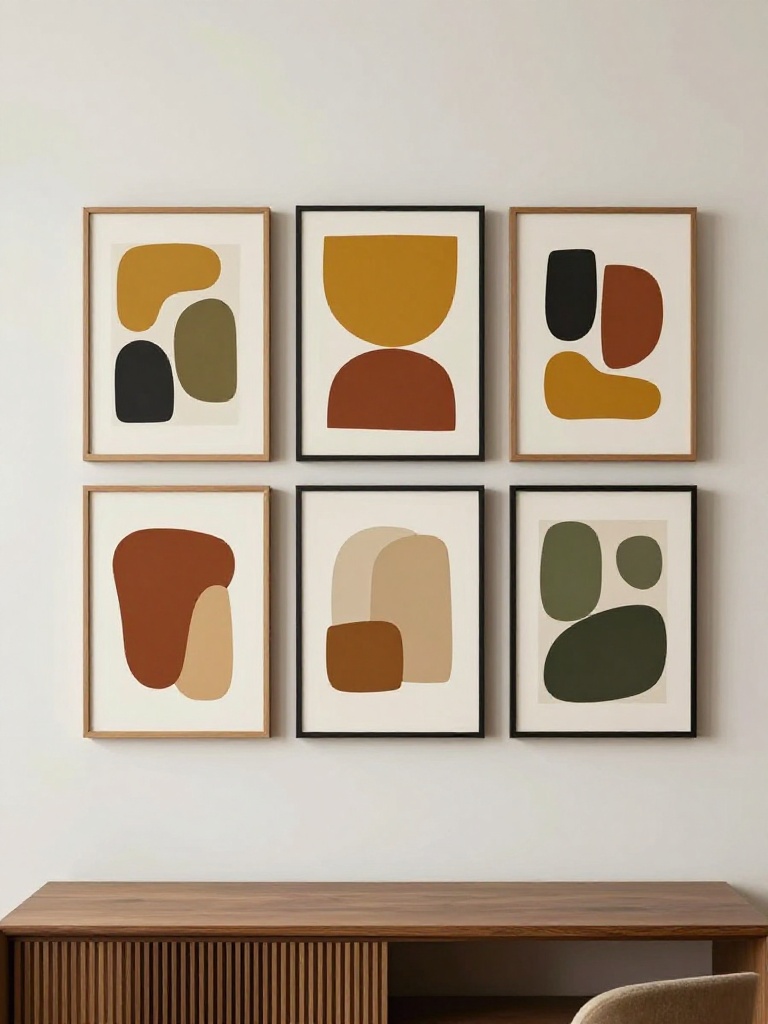
A small gallery wall of abstract, geometric prints is a flexible way to bring mid century modern art into a living room without committing to one large piece. Original mid-century art favored bold shapes and limited color palettes, and a mix of framed prints echoes that without matching exactly.
Color Palette
- Mustard, rust, and olive tones
- Simple black or wood frames
- Neutral wall backdrop
Key Pieces
Choose three to five prints in a similar color family but varied composition, framed in matching thin wood or black frames for cohesion. Mixing one or two frame sizes within the group keeps the layout visually interesting without looking mismatched.
Styling Tips
Lay the arrangement out on the floor first, keeping even spacing of two to three inches between frames, before committing to nail placement. Center the whole grouping at roughly eye level from a seated position, since that’s the vantage point it will mostly be viewed from.
This works especially well above a sofa or console that currently has bare wall space above it.
16. Wood Slat Ceiling Feature Above An Open Living Area
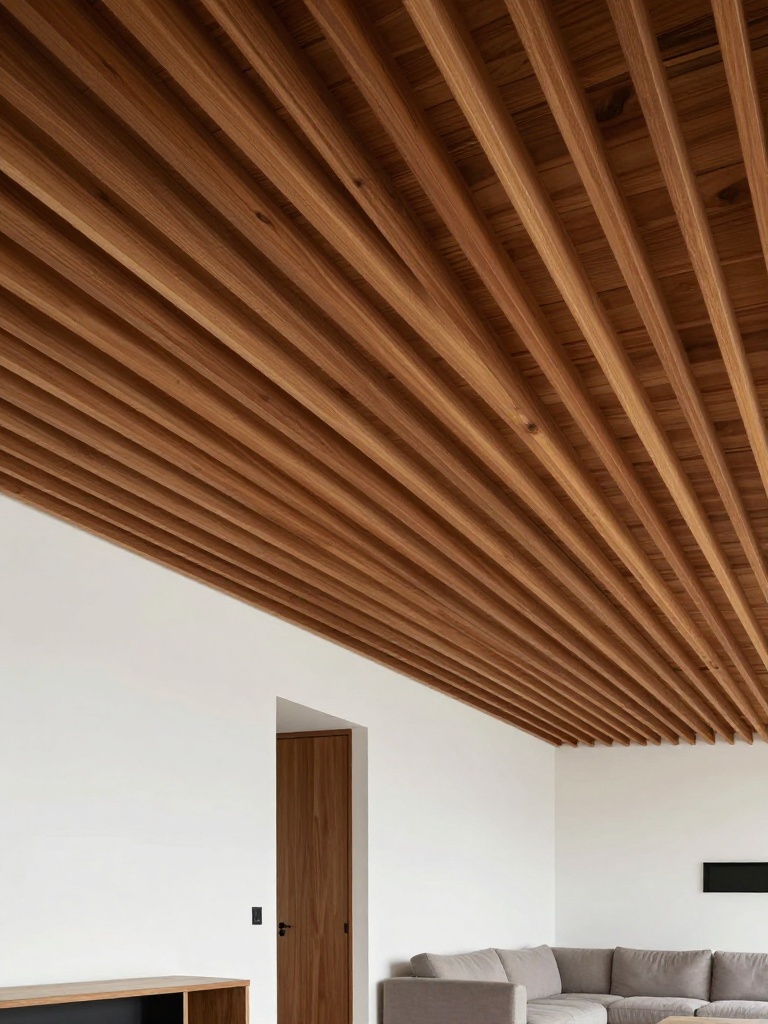
A slatted wood ceiling treatment is a less common way to bring mid century modern warmth into a room, and it draws the eye upward instead of stopping at eye level the way most furniture-only updates do. It adds texture overhead without competing with furniture or walls below.
Color Palette
- Warm walnut or cedar wood tones
- White or light-toned walls
- Simple black or brass fixtures
Key Pieces
Look for tongue-and-groove or slat panel kits in a warm wood tone, installed either across the full ceiling or as a defined band over one seating area. A consistent gap width between slats, rather than irregular spacing, is what makes the finished ceiling look intentional instead of patched together.
Styling Tips
Keep the lighting simple and recessed or minimal where possible, so the wood texture stays the visual focus rather than competing with an ornate fixture. Run the slats perpendicular to the room’s longest wall to make the space feel wider rather than narrower.
This idea suits living rooms with higher ceilings and a builder-grade, flat finish that would otherwise stay bare and undetailed overhead.
17. Two-Tone Sofa In Cream And Rust For A Retro Look
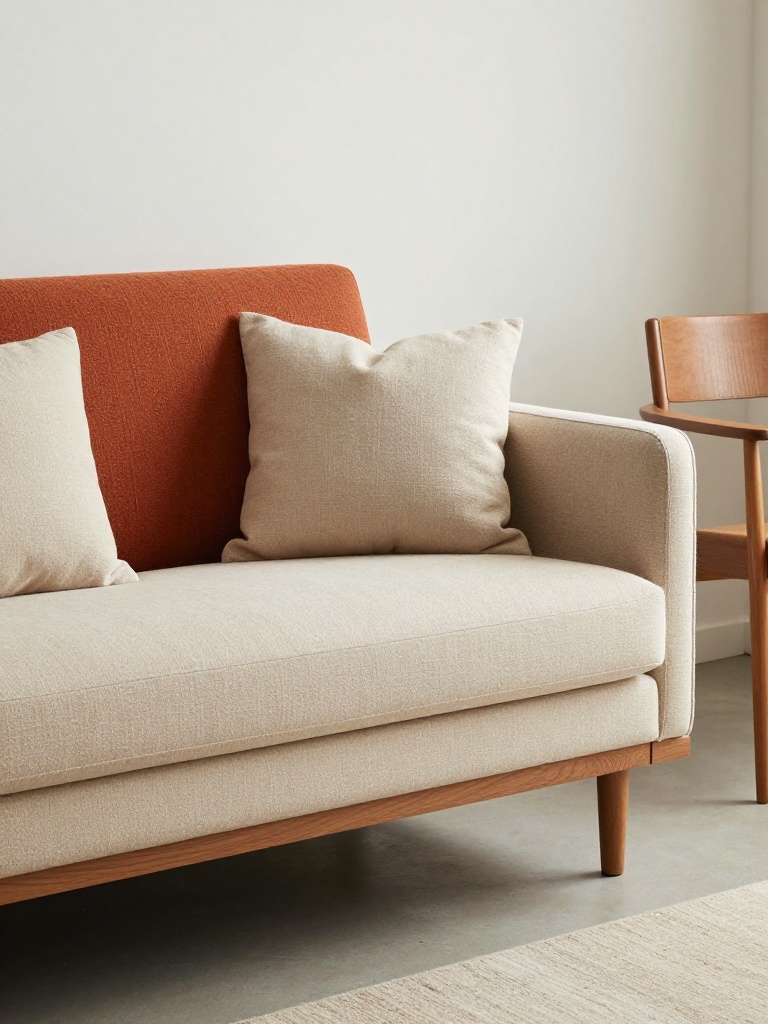
A two-tone sofa — one color on the main body, a contrasting color on the back cushions or base — is a distinctly mid century modern upholstery detail that’s harder to find in current mass-market furniture. Cream paired with rust or burnt orange keeps the combination warm rather than jarring.
Color Palette
- Cream or oatmeal main body
- Rust or burnt orange accent panel
- Warm wood legs
Key Pieces
Look for a sofa with a clearly defined color-block detail, such as a contrasting back cushion or base panel, rather than a busy two-tone print. A boucle or wool-blend upholstery holds the color-block line more crisply than a soft velvet, which can blur the seam between colors.
Styling Tips
Keep the surrounding pillows and throw in one of the two sofa colors rather than introducing a third, so the room doesn’t start to feel scattered. A single wood-framed chair nearby helps tie the sofa’s two tones back to the room’s existing furniture.
This works well for anyone who wants a period-accurate detail without a fully custom piece.
18. Vintage Persian Rug Layered On Light Oak Flooring
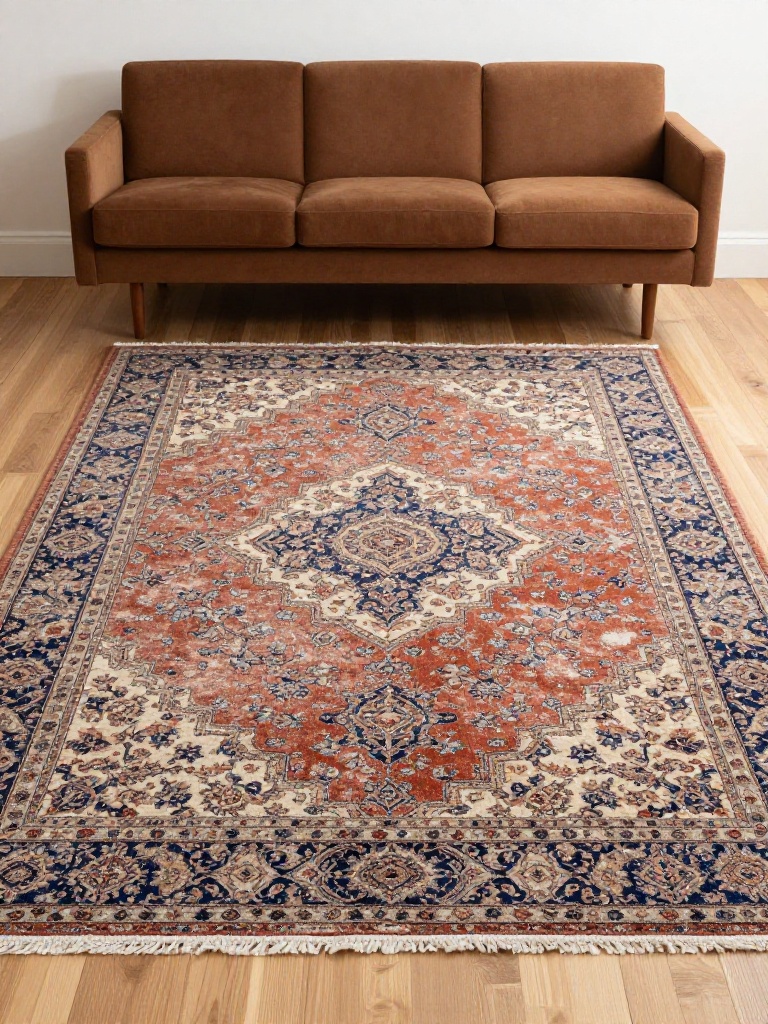
Pairing a vintage or vintage-style Persian rug with light oak floors is a mid-century modern living room combination that feels collected rather than staged. The warm, worn pattern of the rug contrasts nicely with the clean lines of mid-century furniture, keeping the room from feeling too matched.
Color Palette
- Faded rust, navy, and cream rug tones
- Light oak or blonde wood floors
- Simple, solid-color upholstery
Key Pieces
Choose a rug with a muted, slightly faded colorway rather than a bright, new-looking one, since the worn quality is part of what makes the pairing feel intentional. A smaller, room-sized rug works better here than an oversized one, since the pattern should read as a layered accent rather than wall-to-wall coverage.
Styling Tips
Let the rug carry the pattern in the room and keep sofa and chair fabrics solid, so the two don’t visually fight for attention. Position the rug so its border sits at least six inches in from the furniture line, which keeps the layered look from feeling accidental.
This idea suits anyone layering in one antique or vintage piece into an otherwise clean-lined room.
Read also: 14 Toddler Bedroom Ideas That Grow With Your Child
19. Egg Chair With Ottoman In A Corner Reading Spot
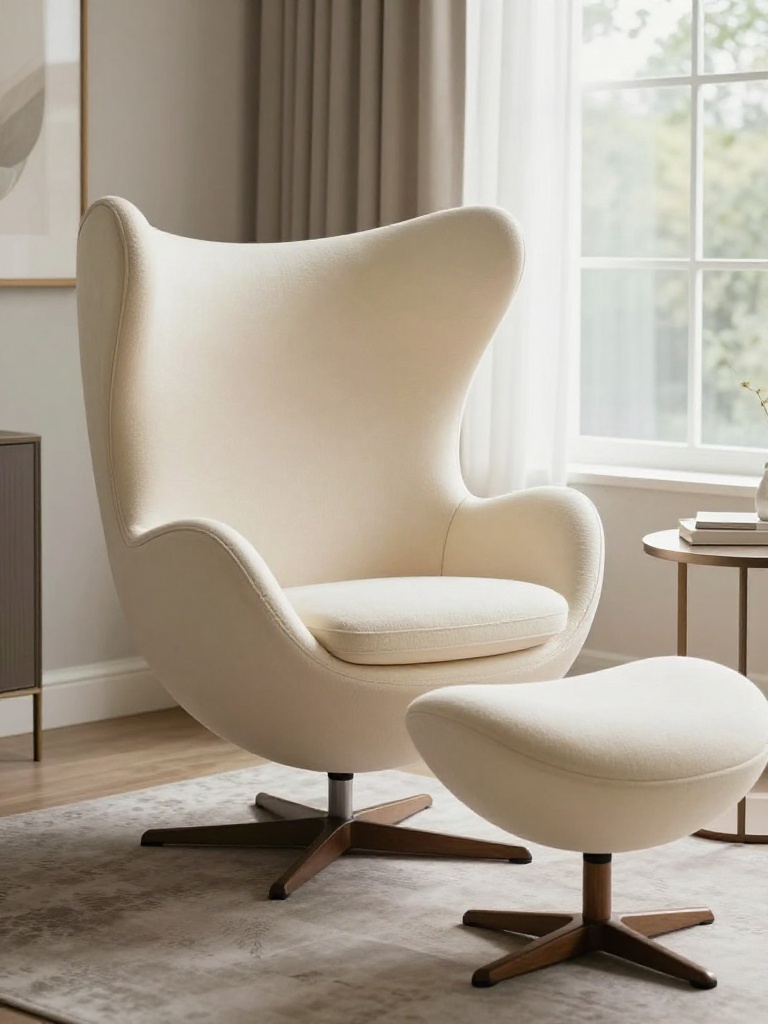
The egg chair, with its rounded, cocoon-like shell and matching ottoman, is one of the most sculptural pieces associated with mid century modern design. Placed in a corner, it creates a defined reading or lounging spot without needing a full second seating group.
Color Palette
- Cream, camel, or deep green upholstery
- Matching wood or metal swivel base
- Neutral surrounding wall
Key Pieces
Look for a chair with a genuine swivel base and a proportional ottoman, upholstered in a matching or closely coordinating fabric. A base with a slight recline function adds real use to the chair, rather than leaving it as a purely decorative piece.
Styling Tips
Give the chair enough clearance to swivel freely, and add a small side table within reach rather than crowding it with extra furniture. Face the chair toward a window or the room’s main sightline so it functions as an actual seat, not just a sculptural object in the corner.
This works best in a corner that currently feels underused or purely decorative.
Frequently Asked Questions
What colors are used in a mid century modern living room?
Warm neutrals like cream and walnut brown are the base, layered with one or two accent colors such as mustard, olive, rust, or teal.
How do I get the mid-century modern look on a budget?
Start with one or two pieces — a coffee table, a lamp, or a rug — rather than replacing every item in the room at once.
Is mid century modern still popular?
Yes, it remains one of the most saved and searched styles on Pinterest, largely because its clean lines and warm woods age well.
What wood is best for mid century modern furniture?
Teak and walnut are the most traditional choices, though oak works well for a lighter, more contemporary take on the style.
How do I mix mid century modern with other styles?
Anchor the room with one or two clear mid-century pieces, like a sofa or credenza, and let the rest of the furniture stay simple and neutral so it doesn’t compete.
The Takeaway
You don’t need to overhaul an entire room to bring mid-century character into it — a single well-chosen piece can carry the whole look. If you’re after a more vintage mid century living room feel, start with one aged or secondhand piece and let it anchor the rest of the space. For a cozy, more lived-in mid century modern living room, lean on nubby fabrics and warm wood tones over hard, glossy surfaces. Whichever direction you take these modern vintage living room ideas, the style holds up because it’s built on warmth and simplicity, not trends.

Ali Hamza Lali writes for the Outdoor Decor category at CozyDecoNest, helping readers turn patios, balconies, and backyards into livable extensions of the home. His guides cover everything from weather-resistant furniture picks to seasonal styling and small-space outdoor setups, drawn from firsthand experience creating outdoor spaces on a range of budgets.