
Bedroom decor in a one-bedroom apartment has to do more than look attractive. It must support sleep, storage, dressing, and sometimes work without allowing furniture to choke the walking path. The ideas below focus on dimensions, materials, lighting, and layout decisions that make a compact room feel deliberate rather than merely filled. They also separate workable choices from the polished shortcuts often grouped under “17 1 bedroom apartment decor ideas simple.”
1. Apartment Living Decor Ideas With Warm Neutrals, Layered Linen, And Light Wood
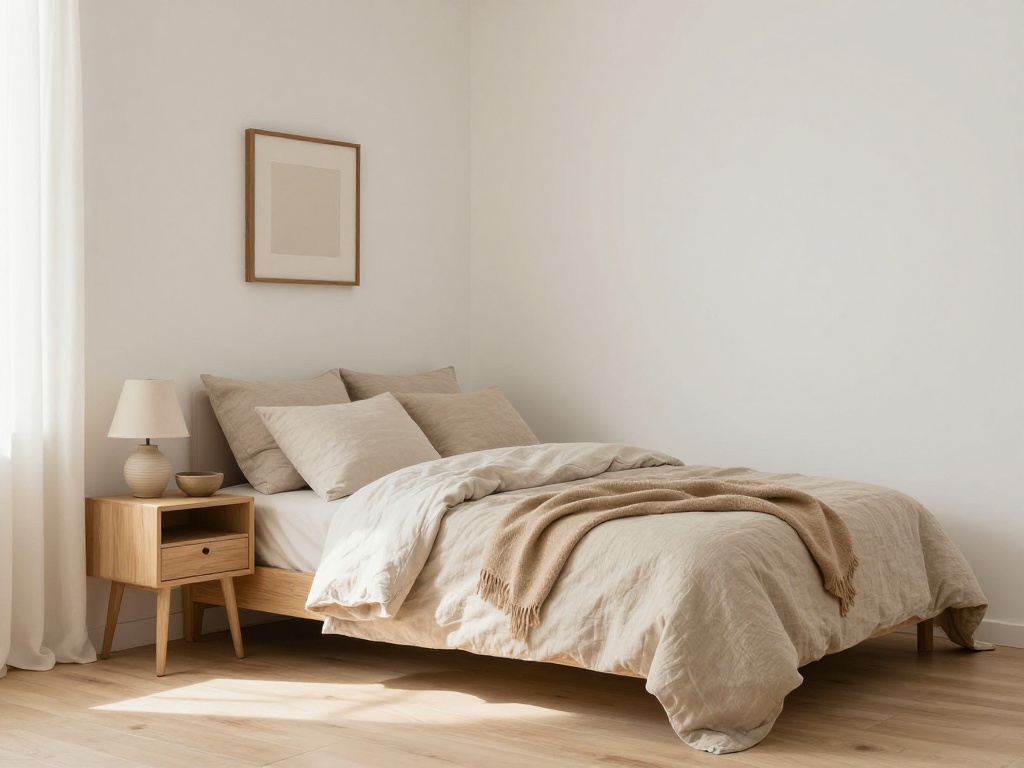
Apartment living decor ideas often begin with beige, but a convincing neutral bedroom needs more than one pale color repeated across every surface. Use warm white on the walls, oatmeal or flax on the bed, pale oak beside it, and a medium brown accent in leather, walnut, or aged bronze. Those shifts in value keep the headboard, bedding, and furniture from blending into one indistinct block.
Texture should provide the variation that pattern would otherwise supply. Combine washed linen pillowcases, a tightly woven cotton duvet, a wool throw, and a lamp with a ribbed ceramic or plaster base. Keep glossy finishes to one or two small areas because strong reflections can make an already compact room look visually busy under evening light.
The beige-on-beige trap
Cream bedding against ivory walls needs a darker anchor within the main sightline from the door. A walnut frame, tan leather cushion, charcoal print, or bronze lamp creates an edge the eye can read; five nearly identical beige textiles do not.
2. Small Bedroom With A Wall-Mounted Bedside Shelf
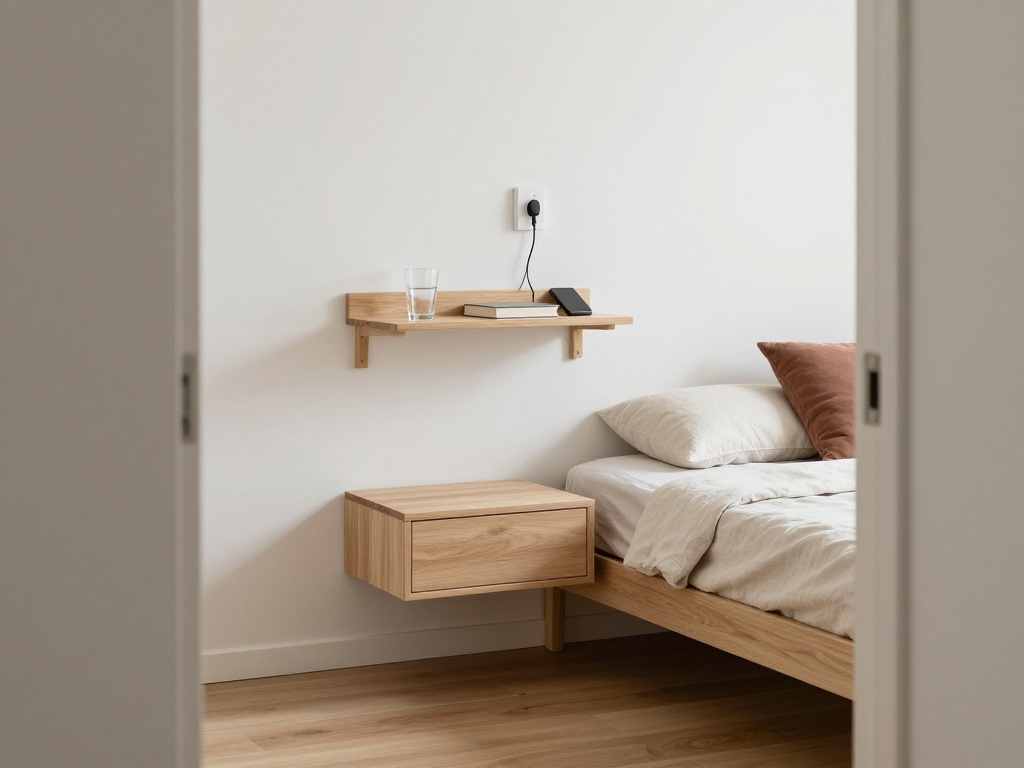
A floating shelf replaces a floor-standing nightstand and preserves several inches of clearance beside the bed. This matters in a narrow room where a conventional 18-inch-deep table would leave less than 30 inches for walking. Choose a shelf deep enough for a phone, water glass, and compact lamp, but narrow enough that your shoulder or hip will not catch its front corner.
Mount the shelf with its top close to mattress height, usually between 22 and 28 inches from the floor depending on the bed frame. A plug-in wall sconce above it keeps the surface open and avoids routing a lamp cord across the shelf. Use a cord cover painted to match the wall so the installation reads as one clean vertical line rather than exposed wiring.
Why shelf depth matters
A depth of 8 to 12 inches handles basic bedside items without projecting like a cabinet. Rounded front corners are worth choosing in a tight aisle because they reduce the impact of accidental bumps during the night.
3. One-Bedroom Apartment With A Soft Upholstered Headboard Wall
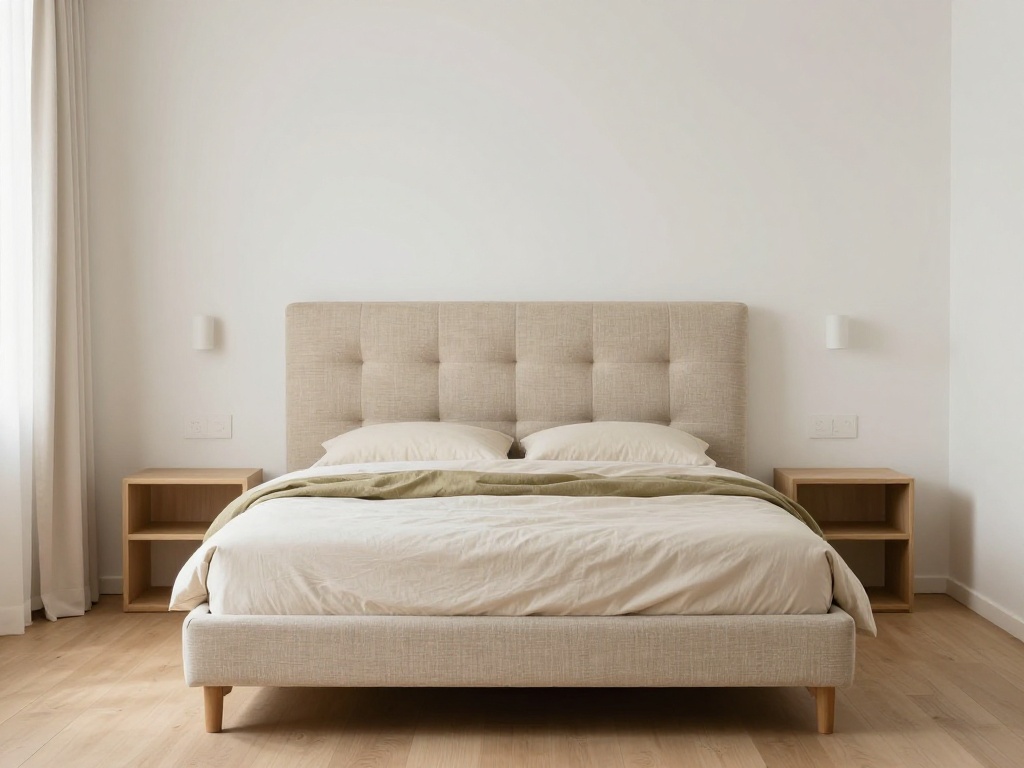
A slim upholstered panel gives a compact bedroom acoustic softness and a comfortable surface for reading without adding another piece of furniture. Choose tightly woven linen, wool blend, or performance fabric in oatmeal, mushroom, muted olive, or dusty blue. Extending the panel four to eight inches beyond each side of the mattress makes the bed wall look broader without requiring a wider frame.
Keep the upholstery depth under three inches unless the room has generous space at the foot of the bed. Repeat the fabric color once in a lumbar cushion, curtain border, or small bench so it connects to the rest of the palette. Bedding should sit at least one tonal step lighter or darker than the headboard, which prevents the pillows from disappearing into the panel.
Where softness becomes bulk
Deep button tufting, rolled edges, and thick foam can steal several useful inches from a narrow layout. A flat panel with shallow padding gives support and sound absorption without reducing the walkway between the bed and dresser.
4. Simple Apartment Bedroom With Floor-To-Ceiling Curtains
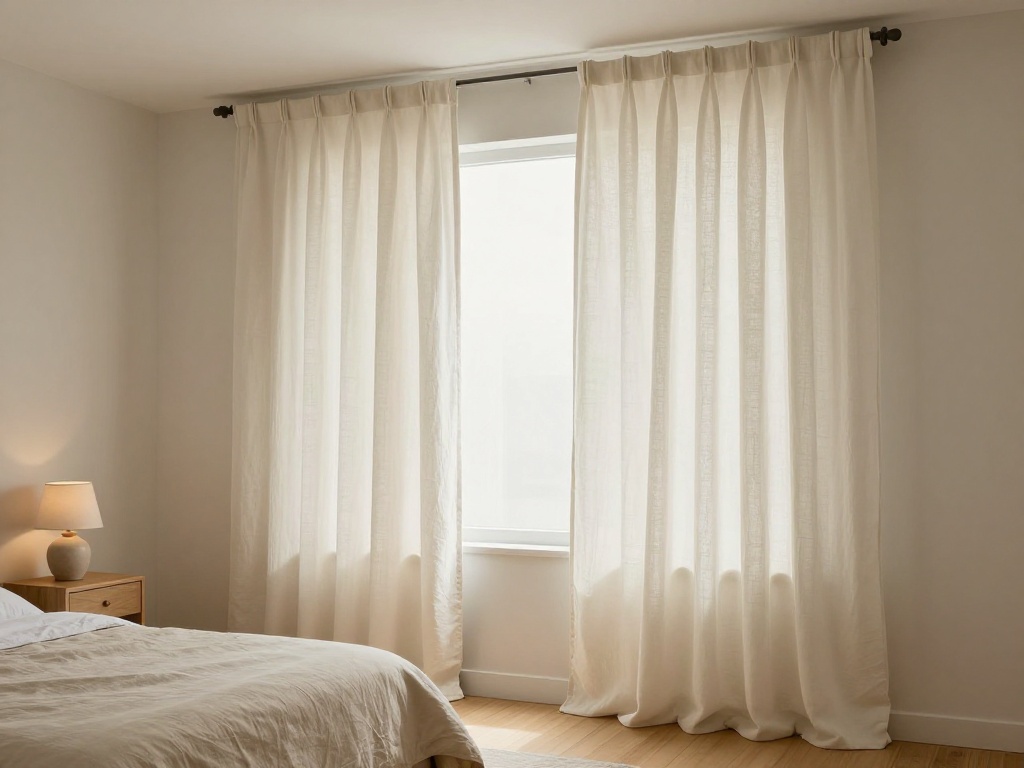
Full-length curtains change the apparent proportions of the room by moving the visual top of the window closer to the ceiling. Mount the rod two to four inches below the ceiling line and extend it six to twelve inches past each side of the frame. When the curtains open, most of the fabric should sit over the wall so the glass remains exposed and daylight reaches deeper into the room.
Choose cotton-linen, matte woven polyester, or another fabric with enough weight to fall in straight folds. Add blackout lining when exterior lights, early sun, or neighboring windows interfere with sleep, but avoid stiff thermal panels that flare away from the wall. Let the hem skim the floor or stop half an inch above it, since deep puddling gathers dust and makes a small room look shorter.
The shortcut that gives the trick away
A narrow rod fixed directly above the window emphasizes the opening’s original width and height. Use panels totaling at least one and a half times the rod width so they still form soft folds when closed.
5. Storage Bed With A Calm Built-In Look
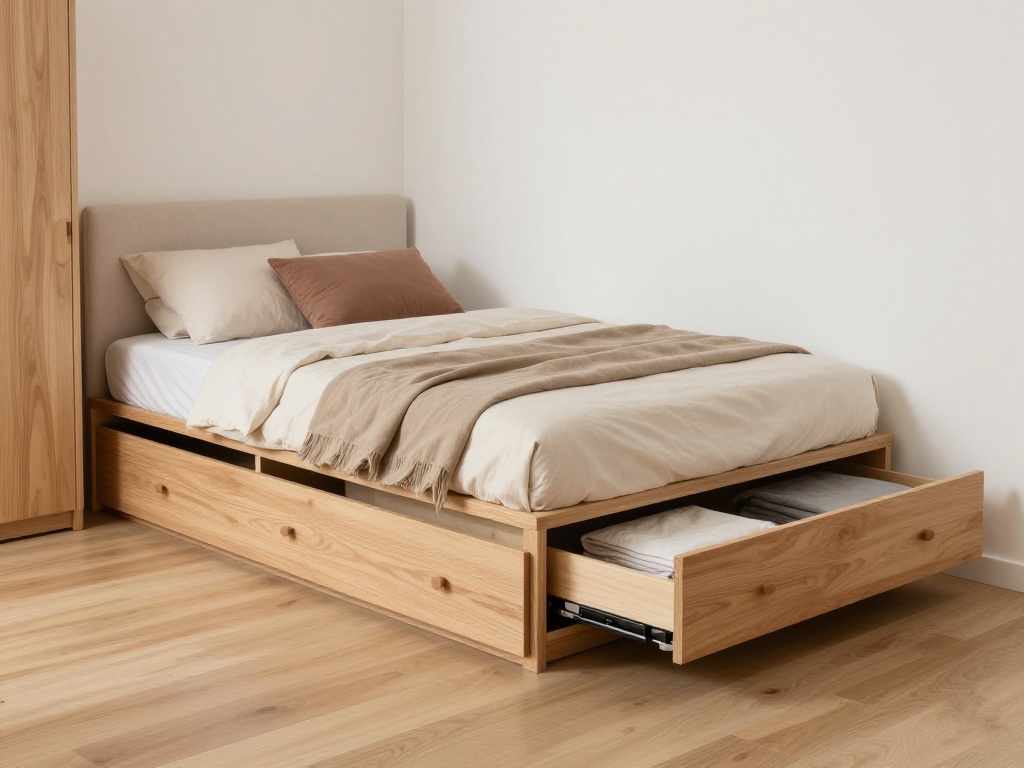
A storage bed can replace a separate dresser when the room lacks enough wall length for both pieces. Side drawers work only when you can pull them out fully, while a hydraulic lift base suits a bed placed close to a wall or wardrobe. Reserve the deepest compartments for spare bedding, luggage, and seasonal clothing so daily routines do not require lifting the mattress every morning.
Decorating small apartments often goes wrong when every piece advertises its storage function. Choose flat drawer fronts, recessed pulls, and a base in the same tonal family as the headboard or floor. Keep one nearby surface almost empty and use a tailored coverlet that stops near the frame, which prevents the lower half of the space from reading as a row of cabinets.
Storage is useful only when it opens
Measure the drawer extension, wardrobe doors, radiator, and room door before choosing the mechanism. A drawer with 20 inches of capacity is wasted if another piece blocks it after the first 10 inches.
6. IKEA-Inspired Bedroom With Modular Wardrobe Storage
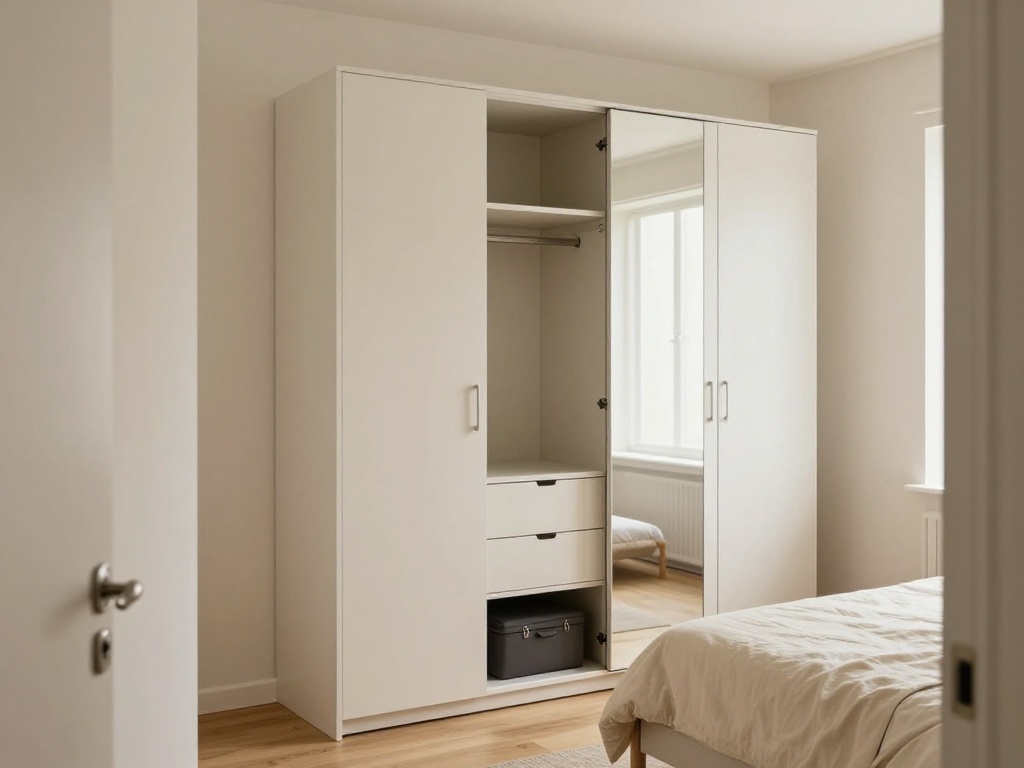
A board labeled “17 1 bedroom apartment decor ideas IKEA” often shows modular wardrobes because they use vertical space more efficiently than a low dresser. Plan the interior around actual garment lengths, folded stacks, shoes, and luggage instead of installing identical shelves from top to bottom. A mix of hanging rails, shallow drawers, and adjustable shelves prevents wasted cavities above short clothing.
Use flat white, pale gray, or light wood fronts when the wardrobe stands within a few feet of the bed. Matching doors reduce visual interruption, while full-height mirrors on only one or two panels reflect light without turning the entire wall into a glare source. Leave an even reveal at both sides, and use a top filler only when it can be secured safely and painted to match the wall.
The built-in illusion has limits
Uneven gaps and random storage boxes above the doors reveal the system as freestanding furniture. Consistent side spacing, aligned handles, and an uncluttered top edge create a cleaner architectural line across the wardrobe wall.
7. Moody Blue Bedroom Balanced With Warm Wood
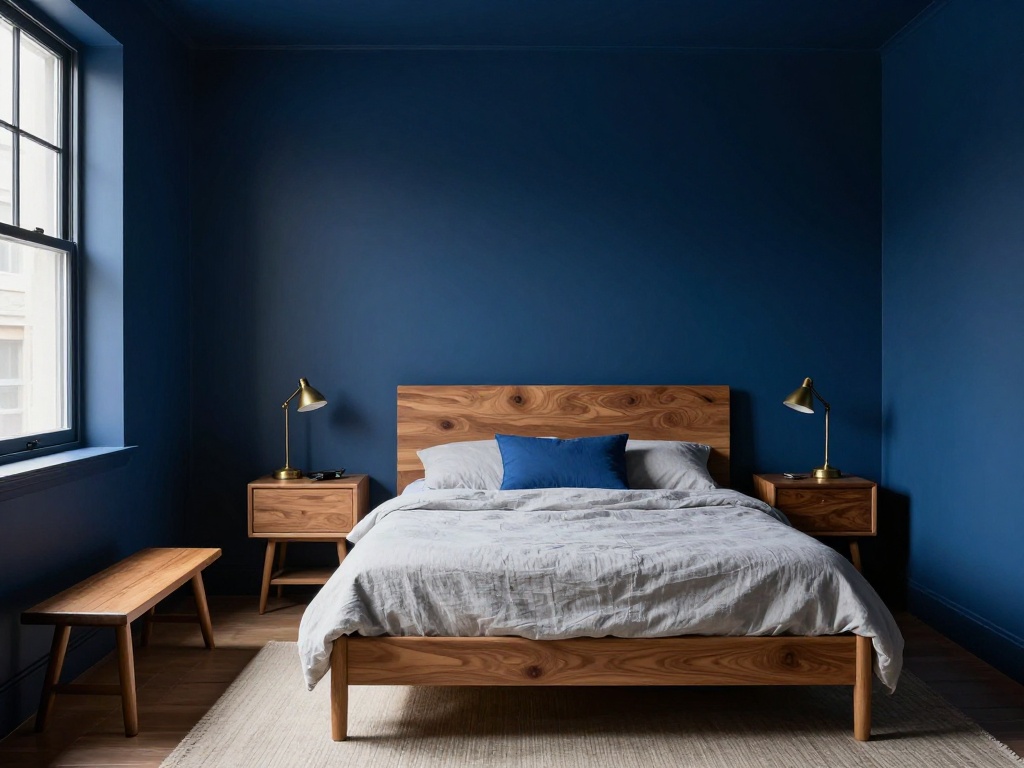
Deep blue walls can make a small bedroom feel enclosed in a restful way when the finish stays matte and the furnishings introduce warmth. Pair navy, ink, or muted slate with oak, walnut, cane, or aged brass. White, flax, or pale gray bedding should occupy the center of the room so the color does not absorb every available highlight.
Paint all four walls for an immersive effect, or use blue only behind the headboard when the room has one small window. Repeat the color in a cushion, throw, or artwork so the wall does not look disconnected from the textiles. Use lamps around 2700K, since cool bulbs can shift navy toward purple and make warm wood appear dull after sunset.
The wood-warms-the-blue rule
Place at least one medium or warm wood surface directly against the blue wall. An all-blue-and-black scheme can look controlled online but often feels harder and colder when viewed under ordinary apartment lighting.
8. Rental Bedroom With Removable Wall Molding
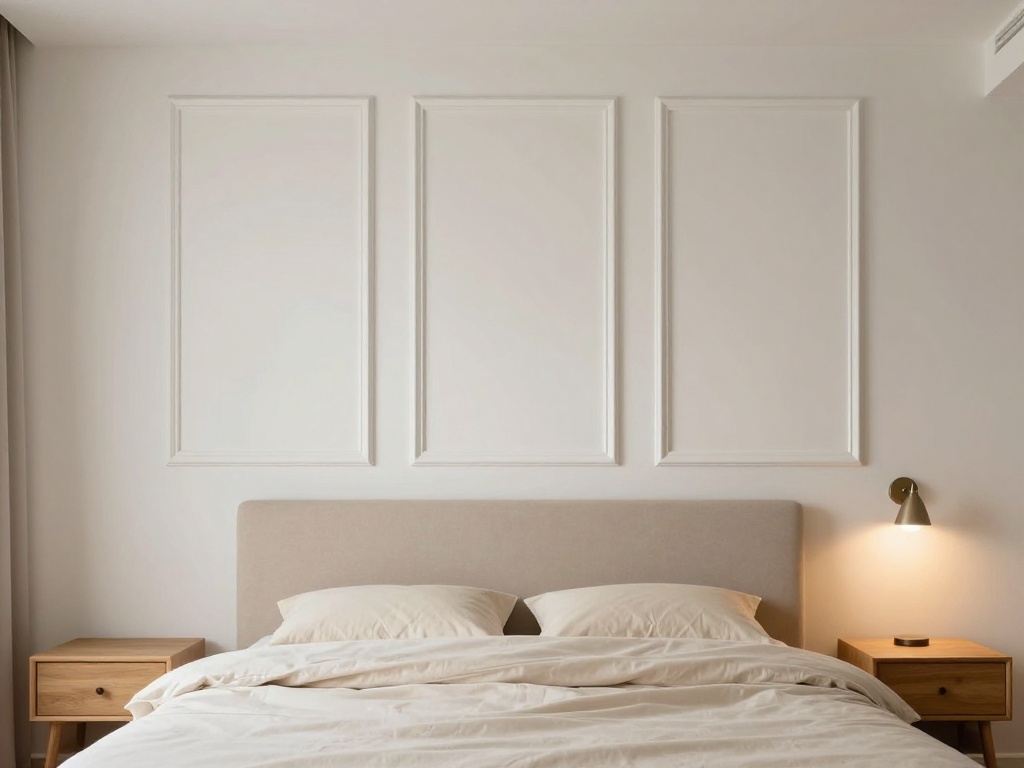
Lightweight picture-frame molding adds scale and shadow to a plain rental wall without relying on a busy print. Use two or three large rectangles behind the bed and paint the trim the same color as the wall for a restrained relief effect. Center the composition on the mattress and headboard rather than on the full wall, especially when the bed sits slightly off-center for circulation.
Choose narrow polymer or lightweight wood trim with crisp edges, and cut the corners accurately so gaps do not become the main feature. Removable adhesive can work on sound paint, but fresh, chalky, or poorly bonded finishes may lift during removal. Keep the lowest molding line clear of the headboard so the panel does not look accidentally sliced in half.
Test the adhesive before committing
Attach a short offcut in a hidden area and leave it in place for several days before covering the focal wall. Pull it away slowly at a low angle; paint that lifts during the test will also lift across the finished focal wall.
9. Minimal Bedroom With One Oversized Artwork
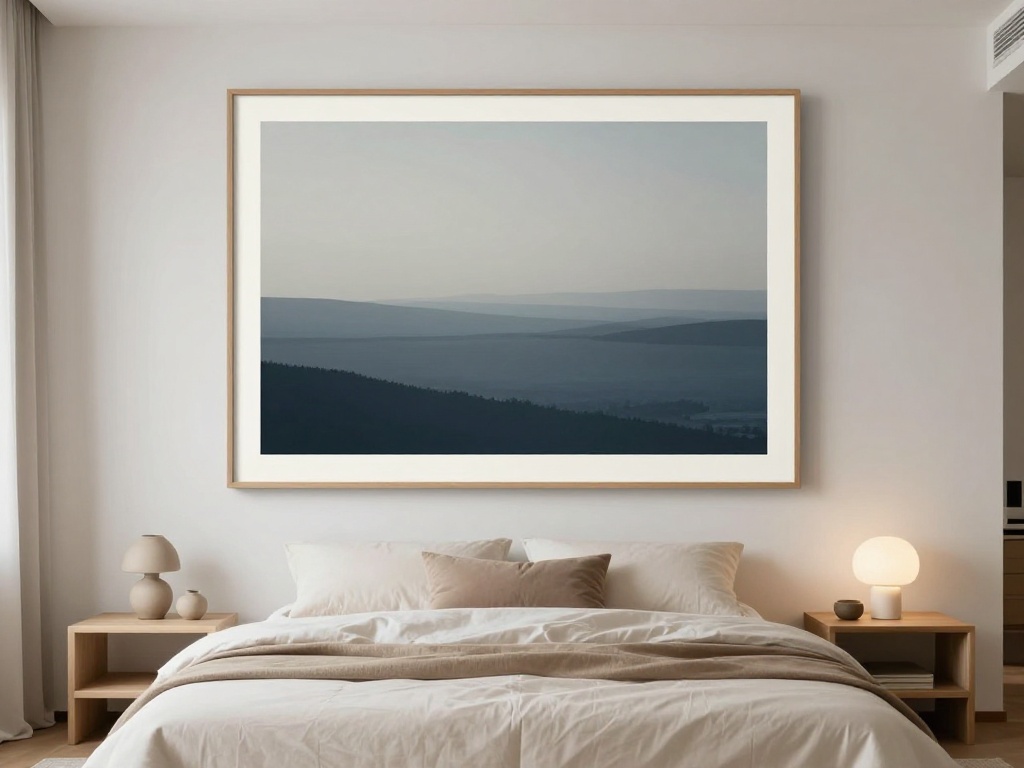
One large artwork creates a clearer focal point than a collection of small frames when wall space is limited. Hang it above the bed, opposite the doorway, or over a low dresser, and size it to roughly half to two-thirds of the furniture width below. That relationship keeps the piece visually connected to the room instead of floating like an undersized poster.
Quiet landscapes, tonal photography, and broad abstract shapes work well because they can introduce depth without adding a dozen competing colors. Choose a slim frame in wood, black metal, or brushed brass, then keep lamps and decorative objects below its lower edge. In a narrow room, glazing with low reflection is useful because a bright window can otherwise turn dark artwork into a mirror during the day.
Bigger is not the same as louder
A large piece can remain calm when its palette contains two or three muted tones and the composition has open areas. Fine detail, hard black-white contrast, and glossy glass create more visual pressure than size alone.
10. Bedroom Decorating Ideas For A Single Woman With A Refined Vanity Corner
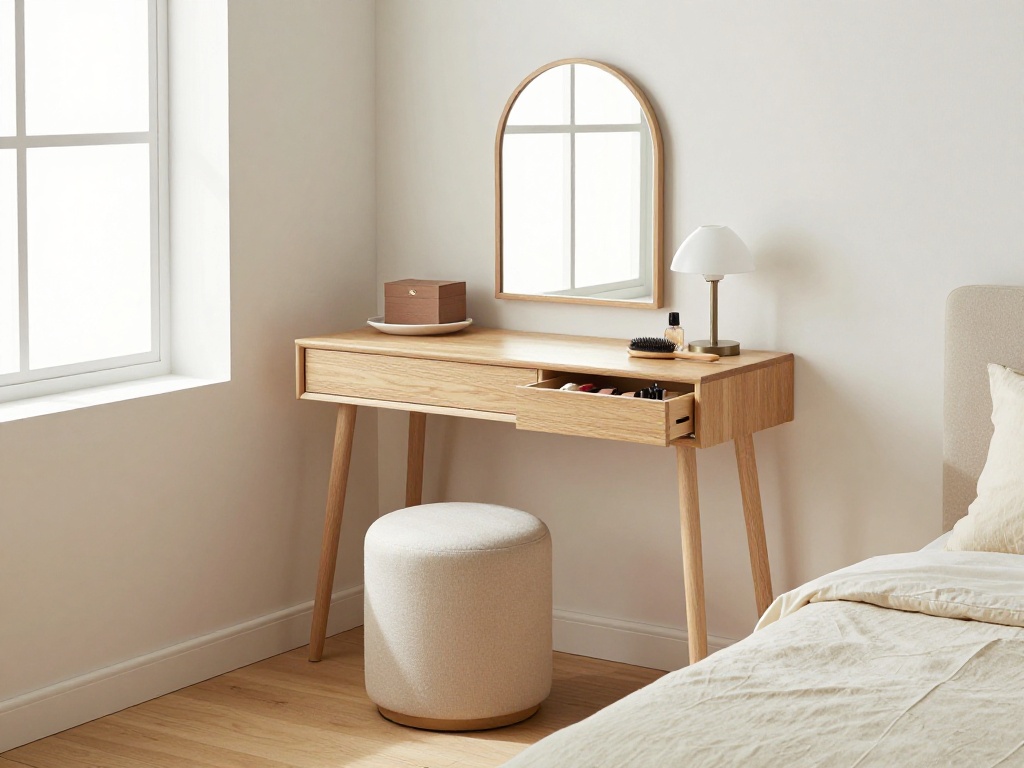
Bedroom decorating ideas for a single woman do not need to rely on blush upholstery, mirrored furniture, or floral accessories. A shallow console between 14 and 18 inches deep can create a useful grooming area without blocking the path around the bed. Pair it with a round or softly arched mirror and a stool that slides fully underneath when not in use.
Place the mirror beside a window rather than directly opposite it so natural light reaches the face without producing severe backlighting. Add a small shaded lamp or wall light for evening use, and keep cosmetics inside a drawer or lidded organizer to protect them from dust. The room feels personal through chosen materials, artwork, and objects, not through a preset gendered palette.
Where pretty becomes impractical
A vanity needs knee clearance, a stable surface, and light that reaches the face from the front or side. An oversized mirror and open rows of bottles will crowd a corner less than three feet wide and make cleaning harder.
11. 33 Small Bedroom Ideas Often Point Back To An Off-Center Bed Layout
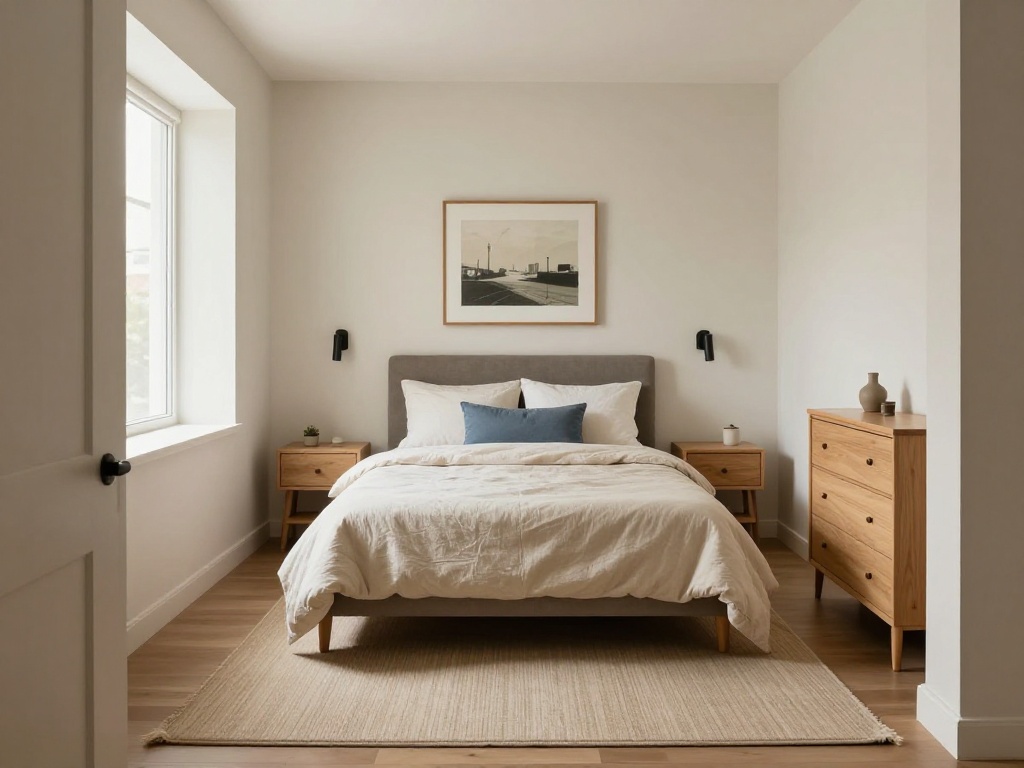
Collections titled “33 small bedroom ideas” often center every bed because symmetry photographs well, but a narrow room may work better with the mattress shifted toward one wall. Moving it even six to ten inches can create enough space for a dresser drawer to open or for a chair to pass without turning sideways. Align the artwork, rug, and primary lighting with the bed so the new visual center feels deliberate.
Use one standard bedside table on the open side and a floating ledge or sconce on the tighter side. Leave enough space to change sheets, ideally at least 18 inches, unless the architecture makes that impossible. Position the rug according to the mattress rather than the room’s geometric center, which keeps the textile from looking misplaced beneath an asymmetrical layout.
Symmetry is optional, balance is not
Two different bedside pieces can still relate through height, material, or color. Forcing a matching pair into a tight layout usually reduces circulation and makes the imbalance more obvious, not less.
12. Apartment Bedroom With A Tonal Gallery Wall
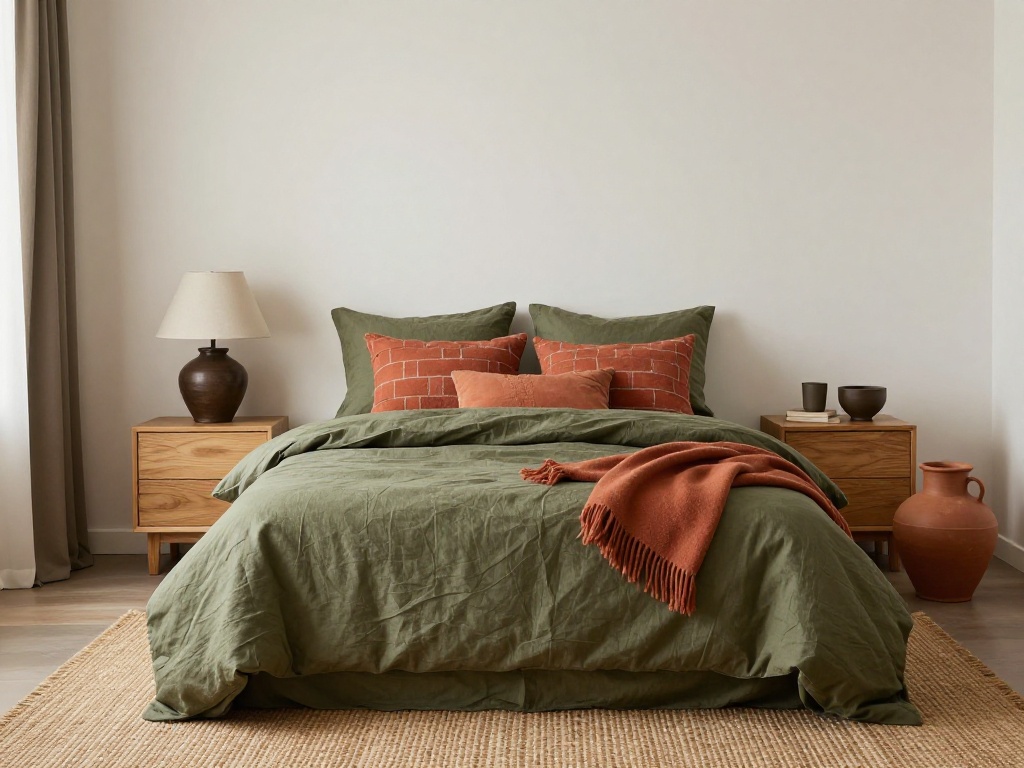
A gallery wall can work above a bed or dresser when the images share a controlled palette and the frames maintain consistent spacing. Choose black-and-white photography, muted sketches, soft landscapes, or abstract prints in two or three related tones. Mix frame sizes, but limit the frame finishes to one or two materials so the arrangement reads as a single composition.
Lay the grouping on the floor first and measure gaps of roughly two to three inches. Build outward from one larger anchor piece rather than hanging the smallest frames first, and keep the total width connected to the furniture below. Generous white space inside the prints helps the wall breathe, especially when the room already contains patterned bedding or textured curtains.
The point where collected turns cluttered
Stop when the grouping has a readable outer edge and visible wall remains around it. Adding another frame to fill every small gap removes the negative space that allows individual images to register.
13. Earthy Bedroom With Olive Green And Terracotta Accents
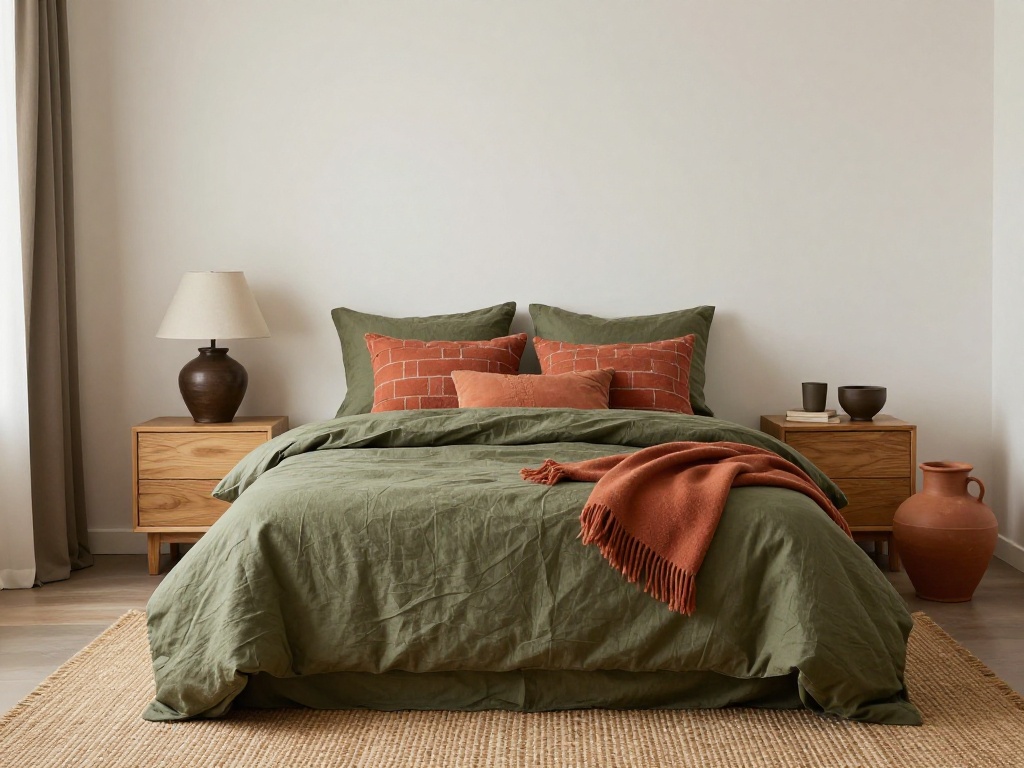
Olive green and terracotta create warmth without depending on an all-beige scheme. Use one as the dominant color and the other in smaller amounts, then add cream, sand, and natural wood to control the saturation. Linen, boucle, woven cotton, jute, and matte ceramics reinforce the dry, mineral quality of the palette.
You do not need to repaint the bedroom to establish the relationship. Olive bedding with two rust cushions, or a clay-colored throw against warm white walls, introduces enough contrast without covering every surface in earth tones. Add dark brown or black through a frame, lamp, or curtain rod so the softer colors have a crisp boundary.
Keep the earth tones dusty
Choose olive with a gray undertone and terracotta that leans toward brick rather than bright orange. Clear yellow-green and saturated orange increase visual energy, which can work in a kitchen but often feels restless beside a bed.
14. Small Bedroom With A Desk That Doubles As A Nightstand
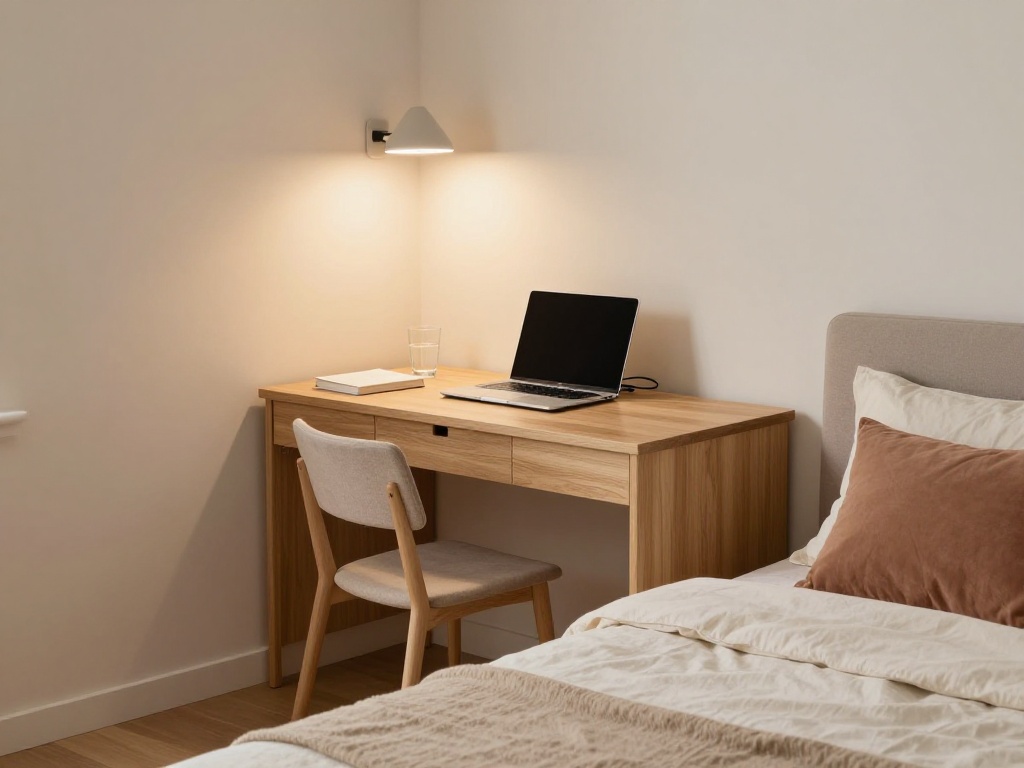
A desk can replace one bedside table when the apartment has no separate office. Choose a surface 16 to 20 inches deep and position it so the corner nearest the mattress remains reachable for a book, phone, or water glass. The chair should slide completely beneath the desk to preserve the circulation path when work ends.
Use a wall-mounted task light or narrow directional lamp instead of a broad shade that occupies half the desktop. Route chargers through one cable clip at the rear and store notebooks, pens, and headphones in a drawer or closed box. Clear the central work surface each evening so the furniture returns visually to the sleeping area rather than presenting an active workstation all night.
The work-sleep boundary needs a cue
Close the laptop, remove loose papers, and leave only one bedside object visible after work. That three-minute reset changes the desk from a reminder of unfinished tasks into a neutral surface beside the bed.
15. Apartment Therapy Small Bedroom With Vintage Layers
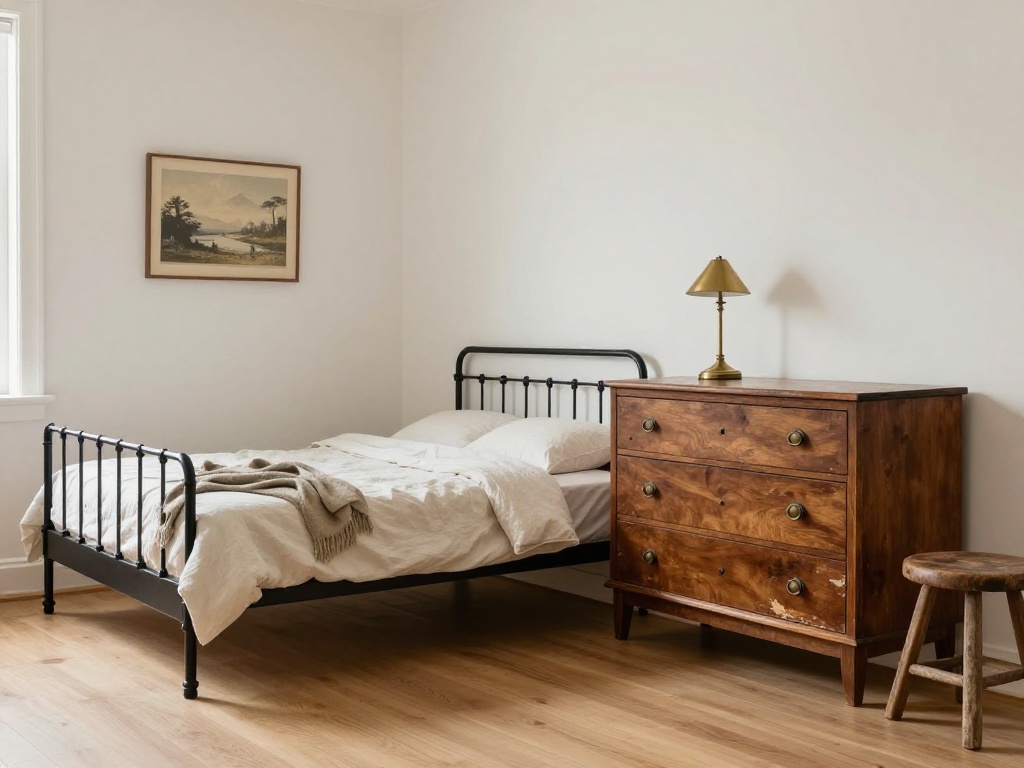
An Apartment Therapy small bedroom often feels collected because it combines one or two older pieces with simple contemporary furniture. Start with a plain bed and quiet walls, then introduce a vintage dresser, worn wood stool, or aged brass lamp. The contrast between patina and clean lines gives the room specificity without requiring a matching furniture set.
Keep each vintage piece useful and give it enough surrounding space for its silhouette to remain visible. A carved dresser beside a simple metal bed has more impact than several ornate pieces crowded into the same corner. Limit the visible wood palette to two or three tones so the room reads as layered rather than assembled from unrelated leftovers.
Patina should not mean poor condition
Check drawer runners, joints, odors, veneer edges, and surface coatings before bringing an older piece indoors. Scratches can add character, but loose frames, mold smells, and peeling unknown finishes create maintenance and health concerns.
16. Soft Black And Cream Bedroom With Graphic Contrast
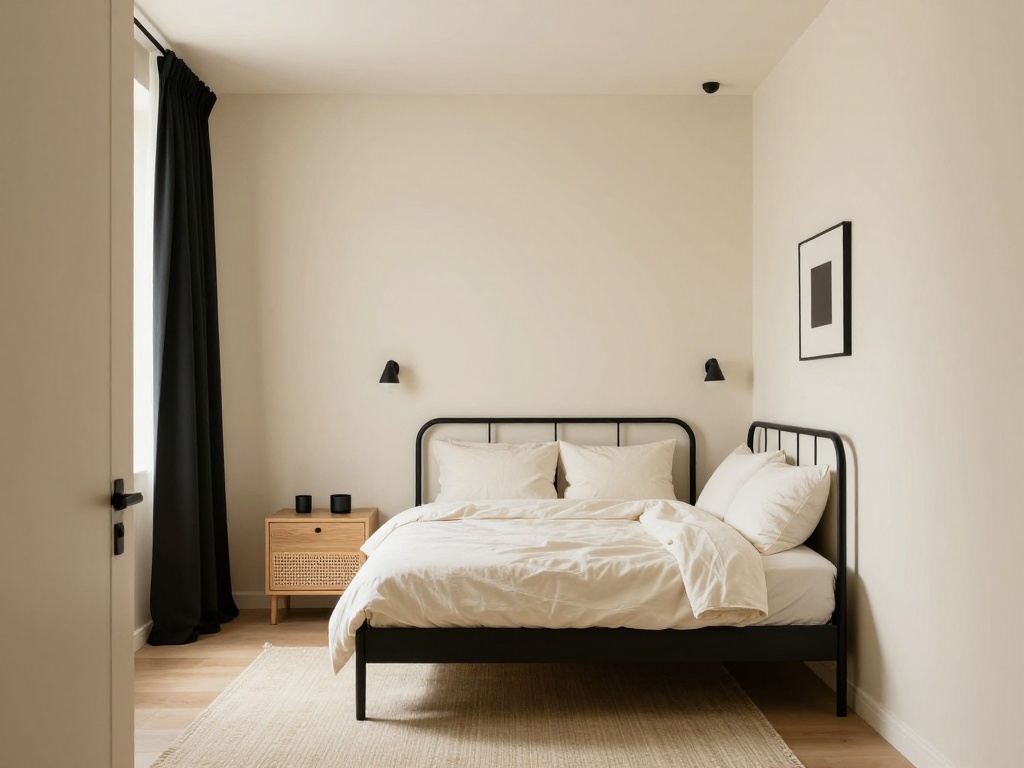
Black and cream create a crisp bedroom scheme when the finishes remain matte and the textiles soften the hard outlines. Use cream walls or bedding as the dominant field, then add black through a slim metal frame, lamps, curtain rods, or artwork. Natural oak, cane, wool, and woven cotton keep the contrast from feeling like a monochrome office.
Repeat black in three or four substantial elements rather than scattering a dozen tiny accents around the room. This gives the eye a clear rhythm from the bed frame to the lamp and artwork. Charcoal, iron, and espresso are useful alternatives when pure black feels too severe against warm white paint.
Contrast needs empty space
Graphic rooms depend on uninterrupted pale areas where the eye can rest. Covering every tabletop and wall with small dark objects turns intentional contrast into visual speckling.
17. One-Bedroom Apartment With A Hotel-Style Bed Wall
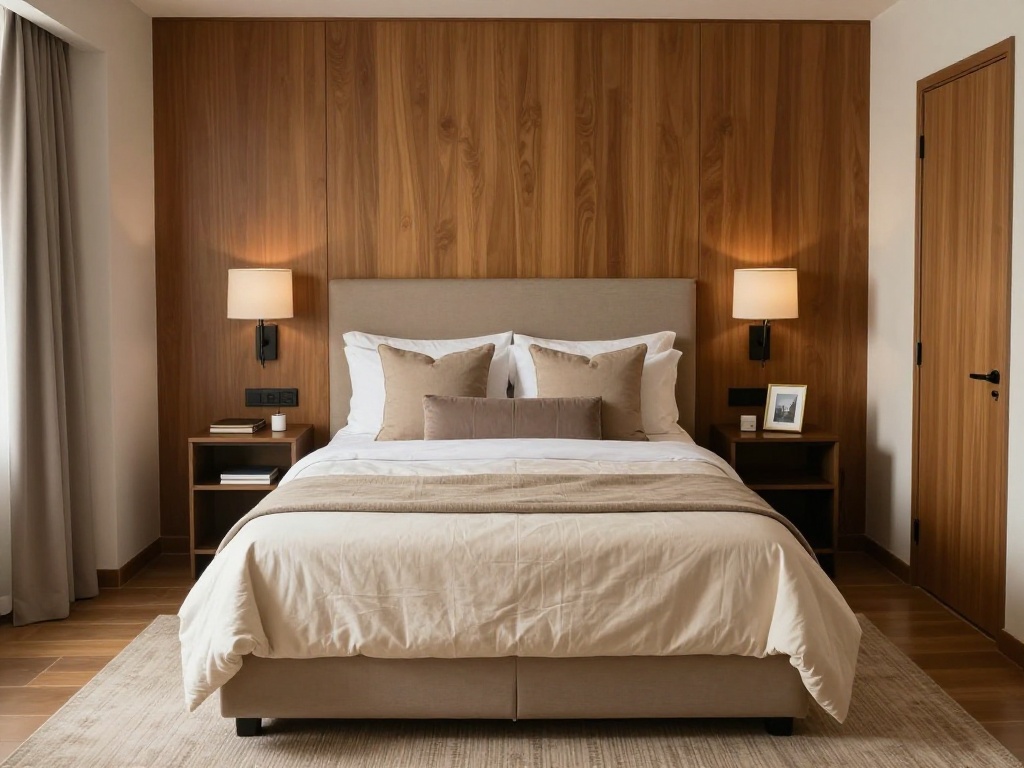
A hotel-style bed wall uses symmetry, layered lighting, and controlled surface clutter to create a strong focal point. Start with a substantial but shallow headboard, add related bedside tables, and place sconces or lamps at matching heights. Crisp cotton bedding, two sleeping pillows per person, and one long lumbar cushion establish a horizontal line without stacking decorative pillows to the headboard.
This arrangement can fit a modest room when each table remains narrow and includes a drawer for chargers, medication, or reading glasses. Place a low-pile rug beneath the lower two-thirds of the bed so it extends at least 18 inches beyond the sides, provided doors and drawers still clear it. Keep each tabletop to a lamp and one personal item so the symmetry remains visible.
The hotel look should still feel lived in
Perfectly bare surfaces and tightly arranged textiles can make the room feel temporary. A softened linen throw, framed photograph, or handmade ceramic dish introduces irregular texture and personal history without disturbing the layout.
Frequently Asked Questions
How do I decorate a small bedroom without making it feel crowded?
Keep the main walkway at least 30 inches wide where possible, use wall-mounted lighting, and choose closed storage that removes loose items from view.
What bedroom colors make a small room look bigger?
Warm white, pale taupe, muted green, and soft blue reflect light; one continuous darker color can also blur corners when the ceiling and trim match.
What are the best simple one-bedroom apartment decor ideas?
Use full-length curtains, layered bedding, one correctly scaled artwork, and a storage bed or tall wardrobe before adding small accessories.
How can I make IKEA furniture look more expensive in a bedroom?
Align doors and handles, leave even side gaps, and pair smooth laminate with linen, solid wood, matte ceramic, or aged metal.
Where should I start after saving 17 1 bedroom apartment decor ideas Pinterest boards?
Choose one layout change, one color palette, and one storage improvement, then ignore saved images that conflict with those three decisions.
Where To Start
Begin with the feature that affects daily bedroom use most, whether that is the walkway, wardrobe access, lighting, or bed position. Once the layout works, repeat two or three materials across the room and remove objects that interrupt those relationships. A finished room comes from measurable clearance, controlled contrast, and consistent scale rather than a high number of decorative pieces.


Saleem Lali is the founder and administrator of CozyDecoNest, where he also writes for the Bedroom and Living Room categories. With a hands-on background in home styling and space planning, Saleem has spent years testing decor ideas in real homes before sharing them — from budget-friendly bedroom makeovers to layout tricks that make living rooms feel bigger and warmer. He oversees editorial standards across the site to ensure every guide is practical, tested, and genuinely useful.